


The need for efficient and cost-effective casino security and surveillance operations has increased proportionally with the complexity of the gaming industry itself and the dangers it faces from sophisticated and high-tech threats.
Camera technology is at the forefront of combatting criminal activity, in addition to preserving the integrity of all phases of casino operations while ensuring the safety and privacy of the public in their on-property interactions and encounters.
Getting a 360 view
The World Game Protection Conference (WGPC), now in its 20th year, will be held March 3-5 at South Point, Las Vegas. It provides delegates the opportunity to meet directly with top manufacturers in the gaming industry who specialize in surveillance, security, and table games technology and solutions.

Ep Smit, Dallmeier
Ep Smit is Head of Business Development Casino for Dallmeier, the exclusive platinum sponsor of WGPC. He brings an impressive skill set to casino camera technology, including integration, product management, and security access control.
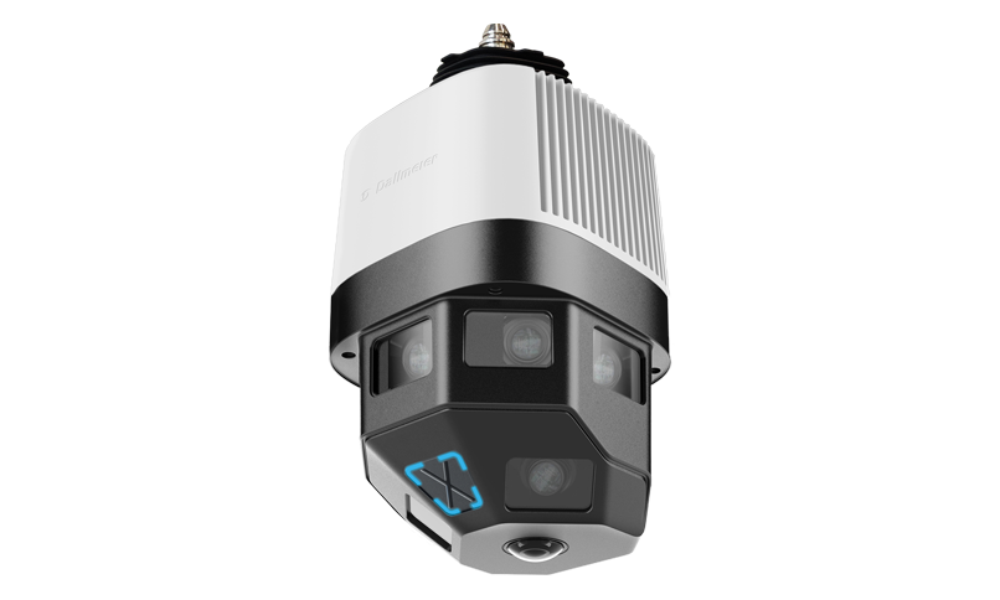
“I think technology has provided so many features for operators to be able to digitally zoom in and get a reasonable quality, unlike the past, where at the moment you digitally zoomed in, you saw nothing,” Smit observed. “We have developed a 360° camera system that combines eight sensors into a single seamless image – without any blind spots. This ensures complete situational awareness and allows you to zoom in while maintaining excellent image quality.”
Dan Scroggins is Vice-President of Sales and Marketing for North American Video (NAV), the surveillance tech sponsor of the Expo. His career in the security industry spans three decades, with a focus on the gaming surveillance market exclusively since 2010.

“From a camera technology perspective, I think what you’ve seen over the last 10 years is the proliferation of a single location camera that can provide video over a broader area,” Scroggins said. “Single sensor 360 cameras or multi-sensor 360 cameras provide a much further range from that of a specific camera location.”
Preparing and equipping casinos for modern surveillance
The world-renowned casino risk expert, Willy Allison, is the Managing Director of World Game Protection. He has assembled a blue-ribbon team of guest speakers for WGPC in addition to a robust slate of 3-hour Core Training Master Classes.
Core Training on Surveillance Management will be taught by Allison himself. He has structured a module of topics to be discussed, including what he breaks down as the four pillars of surveillance: People, operations, communications, and information.
Dallmeier’s Smit emphasized that the higher the resolution the more options are made available, saying “In the past resolution was quite low and surveillance teams had to just try their best to understand what was going on. Today the baseline for a camera is 4 MP.”
Dallmeier, with headquarters in Regensburg, Germany, supplies end users and partners with solutions that meet the highest requirements of the EDU-GDPR (General Data Protection Regulation) principle, “Security and Privacy by Design.”
The company’s Panomera V8 camera series combines eight sensors with multifocal sensor technology, 180-degree field of view, and AI in a single system.
“There are two functions which cameras serve,” Smit said. “One is live, active surveillance. An operator is watching what somebody is doing. The other is retrospective, where the gaming division may alert to the fact there was a considerable amount of money lost at a particular table.”
Panomera Perimeter Solution is another Dallmeier product. It features a purpose-built optical system and specially trained perimeter AI to ensure reliable monitoring of fences, buildings, and roads with minimal infrastructure requirements.
The role of AI in gaming surveillance
“The topics of resolution and picture quality leads of course to AI,” Smit continued. “The end user has a big misconception as to what AI can do. A huge component relies on the resolution of the image that is capturing what you are attempting to track, identify, or classify.

Dan Scroggins, North American Video
“A person, for example, is a large ‘object’ which can be classified easily. Whereas detecting cards or chips on the table is quite different because the objects are much smaller. AI requires sufficient pixel density for reliable detection.”
NAV’s Scroggins agrees, saying that “Like every other industry, AI is making its way into gaming in a big way”.
“There are multiple companies that are producing analytics that either benefit gaming or are designed specifically for gaming,” he continued. “In order to provide the data for those algorithms to work, you must have a quality camera in the right location to generate the data.
“Facial recognition is everywhere. To make a facial recognition application function properly, you need to have a certain number of pixels on target to provide enough data for the algorithm to process. There are AI companies that are developing gaming-specific analytics.
“You can see, from a visual perspective, all the activity in a scene. But when you start moving into analytics, 1080p may not be high enough resolution, a single camera over the top of the table may not provide enough data or the proper camera angle to feed the analytic properly to make it work. These factors are changing the way cameras are deployed in casinos.”
North American Video is a world-renowned Systems Integration company with extensive experience and specialization in delivering integrated surveillance and security solutions for the Gaming market.
NAV’s expertise is in identifying surveillance and security requirements as well as performance criteria for all aspects of gaming facilities to include table games, slot machine areas, cash managing areas, identifying persons of interest at entrances, surveillance for hospitality areas, restaurants and retail stores, warehouses and loading docks, parking lots and garages, entertainment and sports venues, and transportation hubs.
Dallmeier, according to Smit, specializes in “Smart Casino Solutions” which improve surveillance at lower total cost with Panomera technology and optimized marketing with video and AI-based data analysis.
“You can do a lot with AI, but at the same time there has to be a confidence level,” he cautioned. “It is quite easy to detect anything, but to be able to detect something with confidence is quite difficult, especially in a casino environment which does not have stable lighting conditions. There are a lot of flashing lights, and a lot of movement which can cast shadows, making it exceedingly difficult for cameras to manage.
Analytics
“Inside of a demo environment you can do anything to get a good result, but in a real-life environment it is quite difficult. The next phase of camera technology is determining what kind of analytics is useful for the customer and for the casino industry.”
Smit said that he sees three options:
“First, the on-edge analytics,” he explained. “This means that the AI model runs on the camera itself. The processing power of cameras has increased drastically over the last few years, which gives us the ability to have these features on the edge on the cameras at a cost-effective price that customers are willing to pay. We have had the technology for some time, but the cameras were extremely expensive because you had to have a lot of CPU power inside.
“The second option is on-premises server-based analytics. There are some servers which are looking at the data coming from the cameras and looking at those video streams, extracting data, and performing whatever task the AI model is supposed to perform.”
“The third option is cloud, taking data and sending it to a cloud server to be able to do that. Every option has both pros and cons. The pro of the cloud is that you are very flexible. You can utilize an enormous amount of processing power on demand if you require it, but it means that your data is leaving your premises and going into the cloud.
“Of course, within the casino environment, there is a lot of regulation and rules with regards to video data being taken off-site. Presently, this is a gray area and not truly clear as to what is allowed with analytics being done off-site rather than on premises.”
The future of camera surveillance
NAV’s Scroggins believes that as far as cameras are concerned, the resolution is going to increase and the capabilities are going to get better, but the size is going to stay the same.
“There are two schools of thought as far as analytics deployment, or AI, and how much gets pushed to the edge,” he said. “Meaning which analytics are best to reside at the camera and which analytics are best to reside at the head end, in the surveillance room, on a server that processes just the video from the cameras.
“There are companies that are developing high-end processors that are going to be heat efficient enough that they can fit into a camera that would allow those cameras to run more advanced algorithms. As the algorithms become more powerful and efficient, the cost is going to come down because you are going to be able to get more channels on a single server.”
Scroggins believes that surveillance systems are going to have increasingly more capabilities from an AI perspective and that we are going to see more of the technology implemented because it is becoming more cost effective to purchase and deploy.
“There are analytics companies building facial recognition algorithms that will allow for people to check into hotels faster and access certain areas of the hotel property without a key once their image is entered into the database,” he said. “Obviously a camera would need to be responsible for generating that image, and it may have to be placed in a non-traditional location.”
Beyond the minimum regulatory requirements, Scroggins believes that new perspectives are possible with AI.
“Analytics will improve a player’s perspective by enabling staff and all team members to become more efficient in the guest services that are being provided across the property,” he said.
From marketing to threat detection
“What is the trade off,” Scroggins questioned. “How much will it cost? How many more cameras are needed? How high does the resolution need to be? Plus, you must figure in the cost of the ongoing analytic software maintenance.
“What is happening is that they are balancing these factors to determine the value proposition. What makes it worth it to deploy this technology? Many casinos are incorporating that functionality into their budgets because they are focusing on it.
“Not just from security and gaming perspectives. There are marketing divisions within casinos that are using analytics deployed by surveillance teams with applications such as facial recognition to identify advantage players and heat mapping to analyze gaming floor traffic.”
Scroggins reminded that the standard for facial recognition 10, 15 years ago was a two-megapixel camera which had to be located close to an entrance to capture a face properly enough to make the analytic functional.
“Now, with higher resolutions, the camera does not have to be installed in such an inconvenient location,” he said. “Perhaps it can be located higher in the ceiling and even further back from the entrance itself.”
Venturing into the behavior analytics topic, Scroggins explained it is a frontier that previously could only have been detected by human observation.
“An analytic can focus on a group of people and determine if a situation is escalating and becoming agitated,” he said. “There are also weapon detection and analytics that can determine if somebody pulls a gun or knife out of their pocket. The analytics will catch it, identify the weapon, and trigger an alarm.”
The human element
Dallmeier’s Smit expanded on the topic by sharing that with classic intruder detection or loitering on property, a good deal of the technology today creates opportunities for cameras to be autonomous. That is, the camera can react without getting the operator involved.”
This, however, is where Smit expresses a thought-provoking viewpoint.
“I think at the end of the day, we need HI as well as AI,” he said. “HI stands for Human Intelligence. You still require a human being to make the decision. The AI should assist the operator in providing the information that can assist in decision making.
“AI will not take over that person’s responsibility. We are, far, far away from that point. I think the Holy Grail for casino operators is to also possess Behavioral Intelligence.”
The World Game Protection Conference is the only opportunity all year to connect, brainstorm, and learn face-to-face with industry leading manufacturers of surveillance, security, and table games technology and solutions from across the U.S. and world-wide.

