

The CEO of Golden Entertainment told Nevada regulators that a lagging stock price and investors not properly valuing the casino operator caused them to take the company private.
The Nevada Gaming Control Board signed off on the move Wednesday and it will go before the Nevada Gaming Commission on April 23. Last week, shareholders approved the deal that will close in the second quarter for $30 a share compared to the $20 a share prior to the announcement.
Golden Entertainment is selling its operating assets to Sartini and affiliates and its seven casino real estate assets to VICI Properties through a sale-leaseback arrangement.
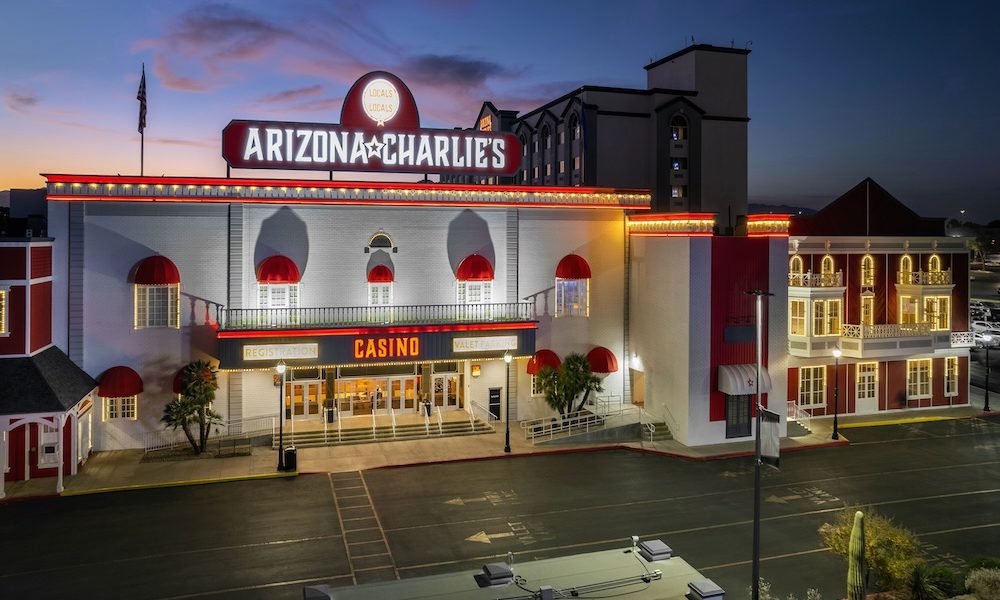
Under the sale-leaseback, VICI will become Golden’s real estate partner for seven Nevada casino properties — Golden flagship property The STRAT Hotel, Casino & Tower on the Las Vegas Strip; Arizona Charlie’s Decatur and Arizona Charlie’s Boulder in the Las Vegas locals market; the Aquarius and Edgewater Casino Resorts in Laughlin; and the Nugget Hotel & Casino and Lakeside Hotel & Casino in Pahrump. Golden will continue to own the real estate for Gold Town Casino in Pahrump. Golden Entertainment also operates 72 gaming taverns in Nevada.
Sartini recounted that Golden Entertainment started trading publicly in 2015 through a reverse merger. The company grew throughout the years, including the purchase of the American Casino assets in 2015, including The Stratosphere on the Strip and two Arizona Charlies properties in Las Vegas and Aquarius Hotel & Casino in Laughlin.
Sartini said the share price that began in the mid-single-digits climbed to a high of $59. The company divested itself of its Maryland casino and two slot routes to reset as a casino and tavern operator focused on southern Nevada. The transactions strengthened the balance sheet and allowed the company to be patient in pursuit of growth opportunities. Those, however, became harder to find, and those considered were too financially risky.
“From an institutional-investor standpoint, our company became too small to gain attention from the public market,” Sartini said. “Additionally, a lack of significant organic growth catalyst further limited investor interest.”
The Board and management frequently discussed options for the company, but no attractive acquisitions were found and no viable merger candidates were identified, Sartini said. “We even considered in the interest of shareholders a sale of our assets if that could lead to creation over the current share price.”
Sartini told regulators that while they learned that their real estate had “an attractive embedded value” and could be unlocked with its sale, the best option was to sell it as part of going private.
Golden Entertainment will undergo minimal personnel changes, with most of those associated with operating a public company, such as a board of directors, Sartini said. Golden Entertainment has about 5,000 employees.
“From a regulatory perspective, you should expect a smooth and seamless transaction,” Sartini said of his family ownership, recalling he was once a crap dealer on the graveyard shift at El Cortez in downtown Las Vegas.
The tavern business is excluded from the deal with VICI, and the plan is to open one to two taverns a year, Sartini told the Board. Financing from VICI will help with upkeep of the casinos.
Gaming Control Board member George Assad was concerned that VICI, which owns casino real estate up and down the Strip, might be a monopoly.
“Once these contracts expire, and if they want to raise the rents by 5%, 10%, or 20% they have you in a bad spot,” Assad said. “I would like to see some real estate transactions with some other companies that may get involved in these lease packs.”
The Golden lease with VICI is for 30 years with four five-year renewal options. The rent will be allocated proportionally based on revenues and profitability across the properties, according to Chief Financial Officer Charles Protell.
Golden will retire the debt in the transaction, which will save on interest expenses. That will help with cash flow going forward, Protell said.
Board Chair Mike Dreitzer asked Sartini why it wasn’t attractive to have an OpCo in a public market and what other advantages Golden Entertainment will now have.
“The public market is all about growth,” Sartini said. “They reward growth. As we looked over the years, there wasn’t anything we saw that was risk-appropriate. Our organic growth wasn’t enough to get the market interested.”
Sartini said there are some onerous costs of being public that will dissipate. He told the Board nothing will change on a day-to-day basis, but it will allow the company to be more patient.
“Sometimes in the public market, you get a quarter-to-quarter report card, and every quarter that goes by there’s expectations,” Sartini said. “Although those expectations may or may not get met, you may get rewarded or you may not. I have always taken a long-term approach to our business and as it has grown pretty significantly over the years, we have made very prudent financial and operational decisions to protect the amount of jobs we provide the industry and shareholder value. Being a private company will allow us to be more selective and patient. We do think we have significant opportunities with VICI as our partner.”
When asked about the drop in tourism in Las Vegas, Sartini said fewer people are coming, but those who are coming are spending more money.

“The expectation is when the Strip (is impacted negatively), the locals market gets a cold,” Sartini said. “Clark County has three million people with a diversified economy and people moving here and businesses built up. The locals business is resilient. Some remnants on the Strip bleed over to local casinos here and there, but generally speaking, the local economy is not only stable, but strong given what’s going on in the gaming community. With 150,000 hotel rooms, the Strip doesn’t wag the dog as much as it would have in the past, because of the diversity of the Clark County economy.”
Before voting yes, Assad said he thinks it is a great idea to take the company private, so Golden doesn’t have to deal with quarterly reports and Wall Street breathing their necks.
“It is basically getting rid of the yoke around your neck,” Assad said. “I’m surprised it took you this long to do it. A lot of great operators are private, like Michael Gaughan (South Point) and Phil Ruffin (Treasure Island) and want to remain private. You don’t have to worry about corporate raiders trying to take advantage and manipulate your stock and shareholders threatening you. Vegas is on the right track in terms of public and private relationships. The big boys, MGM and Caesars, will be fine. They are on a different level, but for the mid-market folks like yourselves, going private is a smart move.”

