
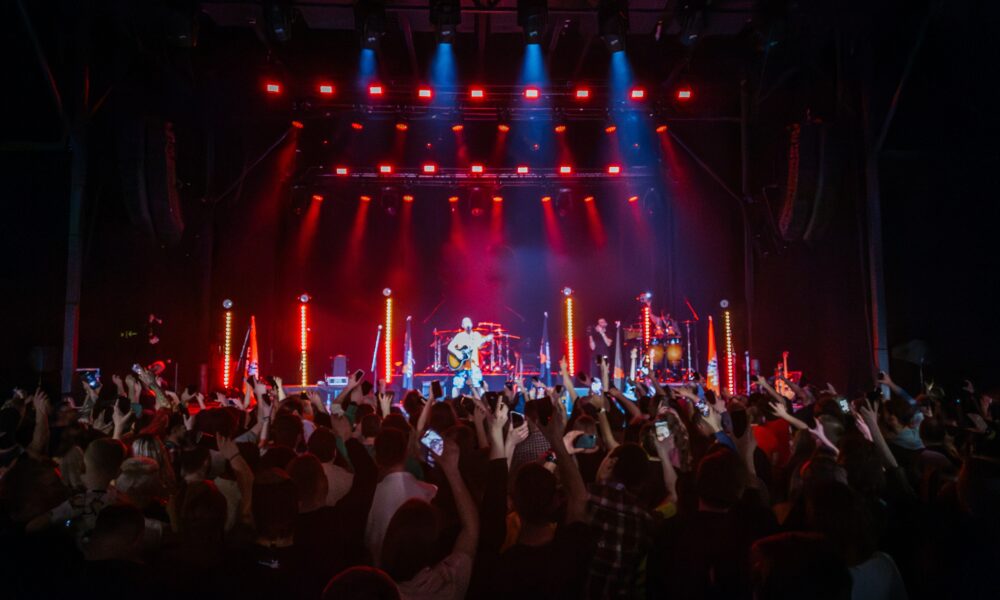

European casino operators may not have the physical scale or regulatory flexibility available to counterparts in the United States or Asia, but that hasn’t stopped them from pursuing growth. Instead, leaders speaking at the Casino Leaders Conference at ICE Barcelona described a shift toward maximizing their footprints through diversified entertainment offerings that extend beyond the gaming floor.
During the panel “Evolving Beyond Gaming Revenue: Entertainment & Community Champions,” Simon Thomas, Executive Chairman of the Hippodrome Casino, and Tom Lionetti-Maguire, CEO of Little Lion Entertainment, discussed the ways in which European venues are evolving under tighter constraints by rethinking how space, entertainment, and customer experience work together.
Thomas pointed to regulatory change in the UK as a foundational moment for casino transformation. “Up to 2005, British casinos weren’t allowed to advertise, promote, or have any live entertainment, and you had to be a member for 24 hours before you could go in and risk any of your money,” he said. Those changes, combined with the Hippodrome’s location in London’s West End, allowed the venue to reposition itself as a broader entertainment destination.
Today, the Hippodrome operates a mix of bars, restaurants, live entertainment, poker, and sports betting, alongside traditional casino offerings. “It’s not just gambling. It’s bars, restaurants, live entertainment, poker, and sports betting now,” Thomas said. He noted that diversification has meaningfully changed the customer base. “A third of my customers don’t gamble,” he noted.
Lionetti-Maguire described a similar focus on diversification, though from the perspective of entertainment-first venues, rather than legacy casino properties. Little Lion Entertainment operates what he described as compact experience-driven attractions. “Essentially, they’re small indoor theme parks, in which we can inculcate many different experiences,” he said.
One of the company’s most visible projects involved repurposing space previously occupied by gaming. “We took 3,000 square meters in Piccadilly Circus and completely refigured it to be a new entertainment space,” Lionetti-Maguire said, referring to the redevelopment of the Trocadero in central London. He emphasized that success depends on making the most of limited real estate. “It’s about sweating the asset and getting different kinds of entertainment into the space to maximize throughput and engagement.”
Both executives pointed to increasingly selective consumer behavior as a key factor shaping strategy. While customers continue to spend on leisure, they’re more deliberate about how they do so. “People are still doing things. They’re still going out,” Lionetti-Maguire said. “They’re just incredibly discerning with their spend.”
Technology, both speakers suggested, plays a supporting role rather than serving as the centerpiece of the experience. Thomas cautioned against adopting new technology without clear customer demand. “The customers don’t want virtual reality,” he said. “They want reality.” Instead, he argued, technology is most effective when it improves operations behind the scenes and reduces friction for both guests and staff.
Lionetti-Maguire echoed that view, describing the future of entertainment as increasingly social and shared. “It’s got to be a social experience, a shared moment.”
Despite regulatory pressures and public scrutiny across Europe, both speakers framed entertainment diversification as a long-term strategic advantage, rather than a defensive response. Thomas emphasized the broader economic and cultural value of leisure experiences, stating, “A life without enjoyment is existence.”
As European operators continue to face limits on physical expansion, the discussion highlighted that growth is increasingly driven by what happens inside existing spaces, rather than by building larger properties. Gaming remains core to these venues, but the speakers emphasized that it now operates alongside food, live entertainment, and immersive experiences, rather than as the sole reason to visit.

