

Native American operators succeed in the commercial-casino arena by instilling tribal values in their workforce and new communities, executives of successful crossovers said Monday.
When the San Manuel Band of Mission Indians in California bought the Palms Hotel in Las Vegas, “one of the top considerations was how we were going to bring the tribe’s values and culture into a new marketplace,” said Erin Copeland, chief legal and compliance officer. The San Manuel Gaming and Hospitality Authority is the first tribal operator to own and run a Las Vegas casino.
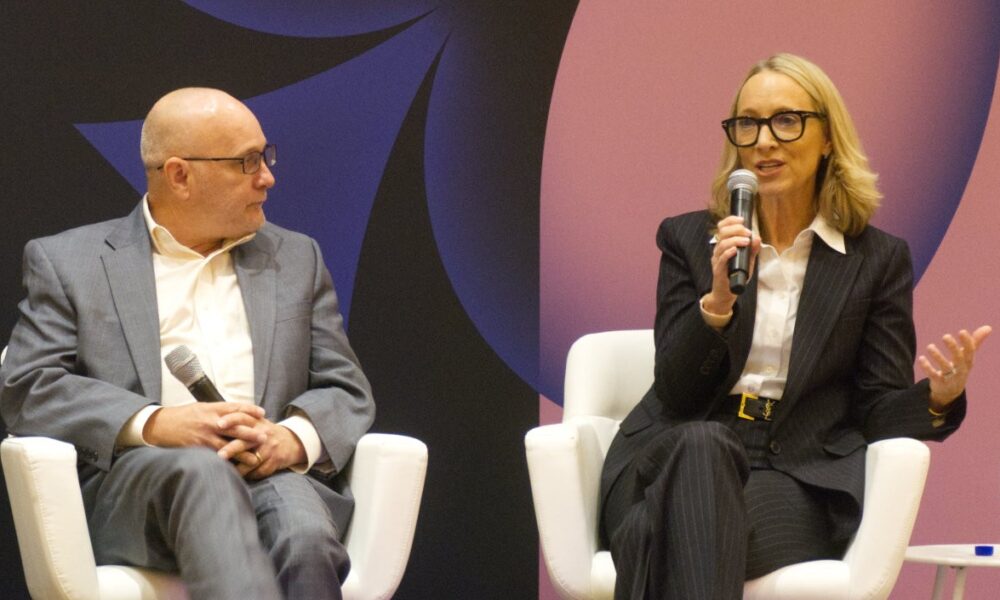
Copeland and executives of two other tribes with track records in the commercial sector spoke at a Global Gaming Expo panel titled “Tribal Crossover: Success with Commercial Entities.” Stephanie Bryan, tribal chair and CEO of the Poarch Band of Creek Indians, told of her tribe’s operations in Pennsylvania, Aruba, and Curaçao. Its 70,000-square-foot Chicago Southland casino, which will include a 252-room hotel, is scheduled to open in 2025. Raymond Pineault, CEO of Mohegan Gaming and Entertainment, pointed to the tribe’s commercial casinos in Pennsylvania, New Jersey, and Canada and the $5 billion integrated resort in South Korea scheduled to open by the end of the year. Sheila Morago, CEO and partner in Trilogy Group, a management counseling firm that promotes tribal diversification, moderated.
The panelists cited various reasons for adding commercial casinos to their offerings: a need to diversify for the Alabama-based Poarch, obtaining lower loan interest rates by having multiple operations for Mohegan, and an emphasis on San Manuel’s core strength in gaming and hospitality. The proximity and prestige of a Las Vegas casino also were factors, Copeland said.
One adjustment of entering the commercial market is a loss of control; the new jurisdiction, not the tribe, determines and enforces regulations.
“We don’t control the regulatory environment, the licensing environment, the background (checks), the taxing environment,” Pineault said. For example, he said Mohegan’s Pennsylvania casino had a 390-day streak of not allowing a minor on the gaming floor, but the first one who got through triggered a fine.
“Our team did an incredible job, but it doesn’t matter,” he said. “It’s their rules, their regulations. You have to abide by them.” He added that compliance differs by jurisdiction.
Bryan said tribes that diversify into different gaming markets invest in those communities, as well as the new properties.
Copeland said the San Manuel tribe’s strategic philanthropy program, begun in the days of Indian bingo, has donated more than $350 million to local charities and government programs. As the tribal casino expanded, it attracted many who studied hospitality at the University of Nevada Las Vegas. That led to a $9 million contribution to UNLV years before San Manuel considered expanding there. Since taking over the Palms, tribal leaders meet regularly with community partners and employees. Tribal representatives have fireside chats with employees about growing up on reservations and the importance to the tribe of operating a Las Vegas casino.

“We’re trying to build resilient communities off the reservation, as well as on the reservation,” Copeland said. Pineault said Mohegan provides similar information, so employees are proud of who they work for.
Bryan said employee orientation in every Poarch property includes segments on the importance of sovereignty and the commitment to tribal culture. She said one of her proudest moments as a leader was donating money to the county school board in Alabama that at one time would not allow tribal members to ride the school bus.
“They know that you’re there, that you’re Native, and that you’re good neighbors. Not only are we building our own communities, we’re building surrounding communities with economic development and employment.”
In response to an audience question about whether tribal ownership of commercial casinos will become widely accepted, Bryan and Morago said tribes will always have to deal with untrue claims, such as Indians don’t pay taxes. Bryan said the Poarch Band tells its story and enlists grant recipients to give their accounts as well. “What people don’t realize is Indian gaming is not just a corporate board. It’s affecting people’s quality of life,” she said.
Morago said tribal ownership will always draw criticism. “It started when we opened our first tribal casino. Everybody will try to take away what we have, because we’re not supposed to be as successful as we are. It’s frustrating, but we’ve built an industry that has taken care of so many people.”

