

Whether aiming to prevent “problem gambling” or encourage “responsible gaming,” operators and regulators should focus on early and personalized interactions with players, Niamh Gallagher says.
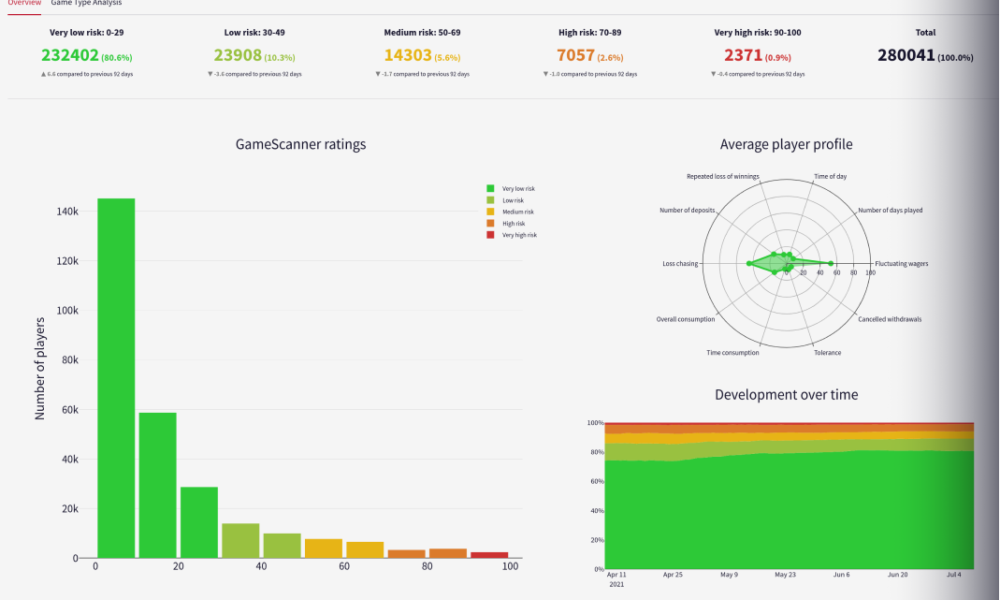
“We’re all about early intervention,” said Gallagher, senior marketing manager for Mindway AI, whose GameScanner software for recognizing signs of addictive behavior is live in more than 65 gambling jurisdictions globally and reviews actions of almost 15 million active players a month. “We work with all stages (of gambling behavior). We’re about prevention and being proactive rather than reactive.”
Players given a generic message about risky gambling behavior are prone to ignore it because they figure it doesn’t apply to them, she said. In contrast, a message with details such as the length of a player’s gambling sessions or the number of buy-ins is more likely to hit home. “It is going to resonate better with them and get them to reflect more,” she explained. That leads to “a longer, more sustainable player base for the operators and just a better ecosystem for everyone.”
Mindway AI, founded in 2018 and based in Denmark, works with online and land-based operators and regulators around the world and will be involved in activities during the U.S. National Problem Gambling Awareness Month in March. That observance is sponsored by the National Council on Problem Gambling, the only U.S. nonprofit focused on minimizing the economic and social costs of gambling addiction.
Mindway AI, which hosted a February webinar titled “Predictions In Responsible Gambling for 2026,” has a global presence, particularly in North America. One of its teams will be in New York City on March 10 and 11 at NEXT NYC, North America’s largest online gambling and sports betting summit. At the same time, other company representatives will be on the opposite side of the globe at the international “Regulating the Game” conference in Sydney, Australia.
At both events, Mindway AI officials will meet with operators of online and land-based casinos interested in personalizing and maximizing their RG efforts. Crown Resorts recently became the company’s largest land-based installation and the first in Australia, and more operators have signed on since, Gallagher said. During the Waste Management Phoenix Open in February in Scottsdale, Ariz., DraftKings’ Responsible Gaming Center spotlighted Mindway AI’s Gamalyze tool, which evaluates a customer’s decision-making in a simulated online card game to provide personalized feedback on betting tendencies. In January, PepperMill Casino announced deployment of GameScanner in its Belgian operations. GameScanner combines artificial intelligence with expert human assessment to identify at-risk gambling behavior.
Gallagher said operators, regulators, and others in the industry recognize a need for “open dialogue” about how each segment can contribute to safer gambling. She said regulators in several countries are increasingly open to discussing the effectiveness of monitoring for problem gambling for regulatory oversight on an individual basis instead of pre-determined betting levels.
That approach evaluates multiple behavioral risk factors rather than focusing primarily on financial thresholds. “It basically shows a more cohesive picture, something that might not be picked up by a human expert alone,” she said. “A hundred Euros or $100 to one person is completely different from another person, depending on their circumstances.”
In addition to DraftKings, Mindway AI’s North American customers and partners include Gaming Analytics, Canada Sports Betting, PrizePicks, US Bets, and Betr.
Online and land-based operators typically have their own methods for reaching out to players about potentially risky behavior, Gallagher said. “There’s so much to unpack in both areas. It’s about not only the language, but the frequency and how you message them, and then monitoring what happens afterward. Once an intervention is made, we can see how their behavior might change and adapt accordingly.”

