

For a long time, marketing decks were basically emotional support documents. Even when the numbers weren’t great, the chart itself felt comforting. A funnel. A line. Something we could stare at and think, okay, at least this is organized. Digital gave us that. Everything could be tracked, optimized, and explained and that alone made it feel manageable.
That comfort hasn’t disappeared, but it has softened. The charts are still there. The dashboards still refresh. They just don’t settle the room the way they used to.
Part of that has to do with how dense the digital environment has become. By 2025, more than 80 percent of Gen Z adults report feeling digital fatigue, with Millennials close behind (eMarketer). Not in a dramatic unplug-everything way, but in the sense that everything starts to blend together after a while, including brand messages that are technically well executed.
Consumer behavior hasn’t made this easier. The average user now actively engages across roughly seven social platforms each month, according to 2025 engagement data (Sprinklr). From a marketing standpoint, that means every message is competing with far more than other brands. It’s competing with group chats, news cycles, algorithmic detours, and whatever the internet has decided is urgent that day.
In that context, offline marketing has started showing up again in planning conversations. Not as a rebellion against digital and not because anyone misses clipboards. It’s coming back because physical experiences behave differently.
They take longer. They require coordination. They’re constrained by time and space. But those constraints force focus. When someone is physically present, there’s less competition for their attention. The experience unfolds with context and atmosphere rather than interruption. You don’t have to fight a feed. You get a moment.
That difference has shown up even in industries that historically stayed online only. In 2025, several AI, fintech, and SaaS companies invested in in-person activations, despite having products that live almost entirely on screens. Coverage from Axios noted that these efforts often generated meaningful earned media and organic conversation, because people had something specific to reference afterward. It turns out that “I went to this thing” still travels well.

From a brand perspective, that matters. Preference usually forms before conversion, built through familiarity and association. Digital marketing is excellent at maintaining presence. Offline experiences tend to create stronger recall. A physical interaction, even a brief one, often sticks differently than another impression sliding past someone’s thumb.
Offline also offers a level of control that has become harder to achieve online. Brands can shape the environment, pacing, and guest mix. You can decide how something feels instead of hoping an algorithm delivers the moment you intended. That kind of control is appealing in a landscape where unpredictability has become the baseline.
None of this means measurement has stopped mattering. Performance, attribution, and ROI still belong in every serious marketing conversation. But there’s more acceptance now that not everything valuable shows up cleanly in a dashboard by Monday morning.
That shift is reflected in budgets. A late-2025 survey from the Association of National Advertisers and The Harris Poll found that more than 70 percent of marketers plan to increase investment in offline and experiential efforts in the coming year. Not as an experiment, but as part of a more balanced approach.
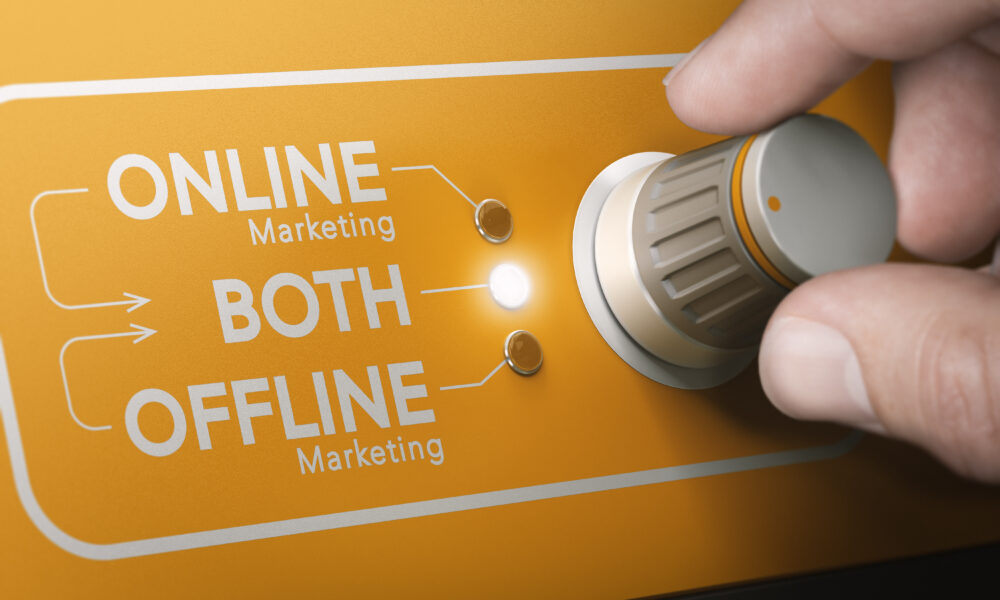
What’s working best right now isn’t choosing one channel over another. Digital continues to deliver reach and efficiency. Offline contributes depth and memory. One fills the funnel. The other gives people a reason to remember what filled it.
Digital isn’t broken, it’s just busy. Offline gives brands a little more room to breathe and a little more time with people. That combination is starting to feel useful again.

