

Unfortunately, I was not able to attend G2E this year. I think I have missed only three of these events since it was first held, under a different name, in 1977, organised by the team at International Gaming and Wagering Business magazine. Little did they know then that their modest trade show would evolve into the behemoth that dominates the global gaming calendar today.
From everything I’ve read, it seems that one phrase echoed across the exhibition halls and conference rooms this year: “prediction markets.” The discussion, it appears, was intense and polarised. Are these products just another form of betting, requiring state licences and regulatory oversight? Or are they entirely new, operating in a grey zone that could upend the carefully constructed framework of regulated gambling in the United States?
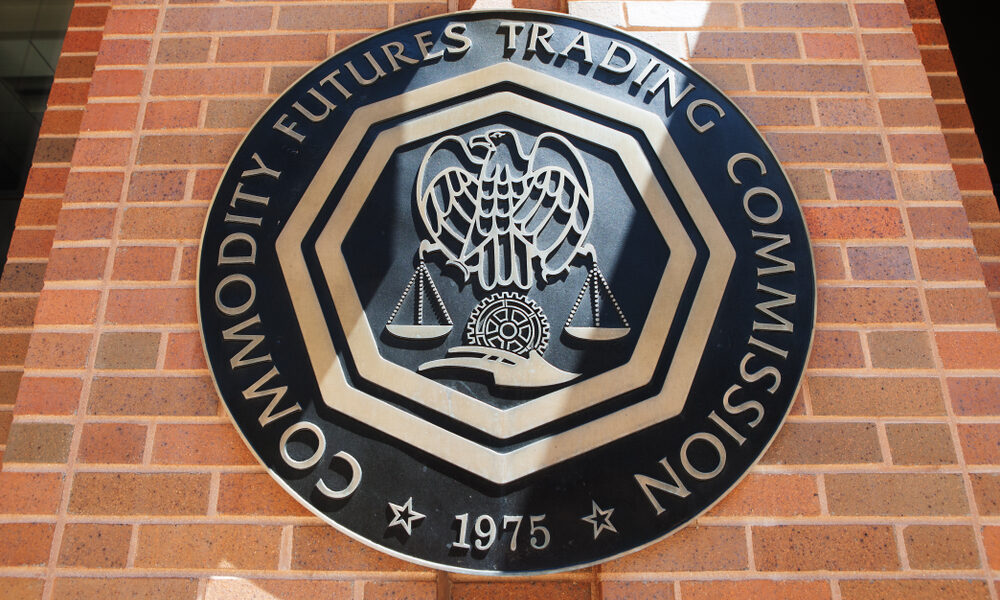
For those who haven’t followed the story and I suspect that’s not many in our industry, prediction-market companies approved by the U.S. Commodities Futures Trading Commission (CFTC) can now offer futures contracts on the outcome of “events.” Historically, the CFTC has regulated commodities and financial derivatives. But as innovation and the opportunity to make money often do, the definition of “events” inevitably stretches dramatically, now encompassing elections, entertainment awards, and increasingly, sports results.
These so-called “event contracts” are, at their core, indistinguishable from betting exchanges: individuals speculating against one another on outcomes. Yet because they’re approved by a federal body, the exchange operators (and market makers) argue they don’t need state gambling licences and shouldn’t have to pay state betting taxes.
When they first appeared, companies like Kalshi were quite open in their language, marketing their product as betting. But as the backlash mounted and lawsuits and cease-and-desist letters from several states began rolling in, the vocabulary shifted. Now, “betting” has become “trading,” and “bets” have become “event contracts.” The rebranding may sound clever, but to my mind, semantics does not change the underlying activity.
One of the most worrying aspects of this development is the lack of consumer protection on these event-contract platforms. State-regulated betting operators are subject to strict rules on advertising, age verification, responsible gambling, anti-money-laundering measures, and dispute resolution. In contrast, the CFTC was never designed or staffed to handle issues of gambling harm or consumer fairness. It regulates markets, not the basic aims of gambling regulation and, as some regulators now insist, morality.
Even Kristin Johnson, the outgoing CFTC Commissioner, expressed concern in July, warning that prediction markets “pose risks to retail investors” and criticising companies that exploit “licensing loopholes for event betting.” When a regulator’s own commissioner sounds the alarm, perhaps it’s time to listen.
Yet not everyone shares this concern. Josh Sterling, a lawyer at Milbank and a former CFTC official, dismissed the notion that consumer protection is even relevant. Speaking at a recent conference, in words that should send shivers down any gambling regulator’s spine, he said: “People are adults and they’re allowed to spend their money however they want. If they lose their shirt, that’s on them.”
He even questioned why the audience seemed to care whether consumers “go broke” on these contracts, while showing less concern about similar risks in other markets.

It’s an astonishingly laissez-faire stance, one that reveals a tin ear about gambling regulation and demonstrates a deep cultural divide. Gambling regulators see consumer protection as the bedrock of their work. Financial regulators, meanwhile, often view risk as a necessary and even desirable feature of participation, caveat emptor. The two worlds are speaking very different languages.
This divergence creates a serious problem for state-licensed betting operators. They’ve spent years and millions of dollars securing licences, complying with stringent rules, and paying substantial taxes. In return, they’ve enjoyed the comfort of high barriers to entry.
Now, they find themselves competing against CFTC-approved operators that pay no state tax, are subject to no gambling-specific consumer rules, and can operate nationwide. The imbalance is overwhelming.
It’s no wonder then that the Intercontinental Exchange (ICE), the parent company of the New York Stock Exchange, has announced a strategic investment of up to $2 billion in Polymarket, valuing the prediction-market platform at roughly $8 billion. ICE clearly sees where the wind is blowing. If betting can be dressed up as “trading” (wasn’t it ever thus?), then Wall Street is ready to join the party.
Some states are not taking this lying down. Several have issued cease-and-desist orders to CFTC-approved exchanges, only to find themselves on the receiving end of lawsuits from those very companies. The message from these platforms seems to be: “We’re federally licensed, you have no jurisdiction, and we’ll see you in court.”
Meanwhile in Massachusetts, regulators have accused Robinhood of trying to “make an end run” around state sports betting laws, urging a judge to dismiss the company’s lawsuit against the state. It’s the same story: tech companies testing the limits and regulators scrambling to respond.
There’s a familiar pattern here. The playbook is straight out of Silicon Valley: launch first, ask forgiveness later. The mindset is that if you grow fast enough and capture enough users, regulators won’t be able to catch up or possibly won’t dare to shut you down.
Kalshi, for example, has already announced plans to go global, offering event contracts in 140 countries. According to their list, only six European nations, Belarus, Belgium, France, Monaco, Poland, Russia, and the UK, are excluded. The rest of the world, apparently, is fair game.
But their understanding of international laws seems shaky. Journalist Brian James from InGame reported that his team was able to place a bet from the UK. Kalshi’s defence? The account had been created by a U.S. citizen. That’s a flimsy argument, as we know what matters is not just where the company is based, but where the bettor is located.
If Kalshi intends to offer its product across Europe, it might want to invest in some basic geolocation software. And one has to wonder: How many European regulators are even aware of these plans?
Prediction markets are fascinating in theory. They can aggregate public opinion, forecast probabilities, and perhaps even inform decision-making. But in practice, when tied to sporting events and offered to the general public for profit, they are betting but by another name.
If the U.S. and other countries allow these platforms to operate unchecked, it risks undermining the entire nation/state-based regulatory system that has been painstakingly built over decades. States will lose tax revenue, licensed operators will lose their competitive protection, and consumers will lose the safeguards they currently enjoy.
This isn’t innovation — it’s regulatory arbitrage.
The CFTC is a fine institution, but it was never meant to police gambling. Its mandate is financial stability, not player protection. Until the legislators or the courts draw clearer boundaries, we can expect more friction, more lawsuits, and more confusion.
And if history is any guide, by the time the dust settles, the disruptors will have already made their billions.

