

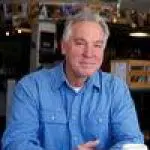
These days you’ll occasionally catch glimpses of the late organized crime gambling expert Ralph Salerno in mob documentaries. For years he was a go-to guy for journalists of every medium for perspective on the underworld’s illegal bookmaking and numbers rackets.
Salerno, a highly-decorated New York City Police Department detective, retired in 1967. He died in 2003. But his many seasoned opinions on sports betting, and the eventual need for the leaders of professional leagues to catch up to public opinion on the subject of legalization, still resonate, whether you find them on the Internet or in some of the books to which he contributed. In his obituary, The New York Times cited news reports commending Salerno as having “the reputation of knowing more about the Mafia in America than anybody not sworn into it.”
And Salerno really understood the importance of illegal bookmaking to traditional organized crime’s bottom line. His historical perspective is especially instructive in the current climate which finds the American Gaming Association lobbying to repeal the Professional and Amateur Sports Protection Act of 1992 (PASPA.) It’s a move that, if successful, could lead to legalization of sports betting outside Nevada.
Salerno understood the potential challenges inherent with legalizing sports betting. Contrary to some of its most confident advocates, no one who knows the business really believes it will end illegal sports betting. There will always be a market for sports bettors to place wagers in the shadows, especially with bookmakers who offer ready credit.
In investigative reporter and author Dan Moldea’s 1989 book, Interference, an in-depth investigation of the National Football League’s historical ties to gamblers, illegal bookmakers and mob elements, Salerno offered a view that was then still controversial among law enforcement leaders.
“Absolutely, gambling on NFL games should be legalized — for the same reason you need offtrack betting,” Salerno observed. “I don’t think that gambling is evil. I just don’t like the current management and how they use their money.”
He also tried to cut through the mystery surrounding the world of the pay-and-take.
“I don’t like the bookmakers of America — the gambling community or whatever you want to call them — and what they do with their profits,” he said. “We long ago proved that you don’t have to be a wizard bookmaker to be a successful bookmaker. That’s the shit they threw at us when they opened OTB.”
The challenge of legalized gambling has been not just in presenting the activity as clean and free of undesirable elements, but actually keeping up that end of the bargain. Salerno believed then that technology, professional accounting, and oversight could go a long way toward changing the transaction that so many millions of Americans enjoy whether it’s legal or not.
“The government or the private sector can use IBM or Honeywell or anybody else that makes computer hardware and software,” he told Moldea. “Why can’t we do what any bookmaker already does? You get someone who knows how to program computers. Then you get someone from Merrill Lynch or Dean Witter. They’ve been running gambling operations for years — they call it the stock market.”
At the time, Salerno saw the wisdom in forming a national umbrella organization: “… then the individual states could legalize sports gambling and make money.” And although the layoff of bets necessary to keep the books in relative balance could be tricky, allowing operations in various states to communicate and conduct business would solve the problem.
“If you play it right,” Salerno said, “the public will have less of a toleration for other forms of organized crime activity.”

Some of his references may appear dated after nearly three decades, but Ralph Salerno’s perspective has withstood the test of time.
Now that it appears the Oakland Raiders will one day make their home in formerly off-limits Las Vegas, can the national legalization of sports betting be far away?
John L. Smith is a longtime Las Vegas journalist and author. Contact him at jlnevadasmith@gmail.com. On Twitter: @jlnevadasmith.
