

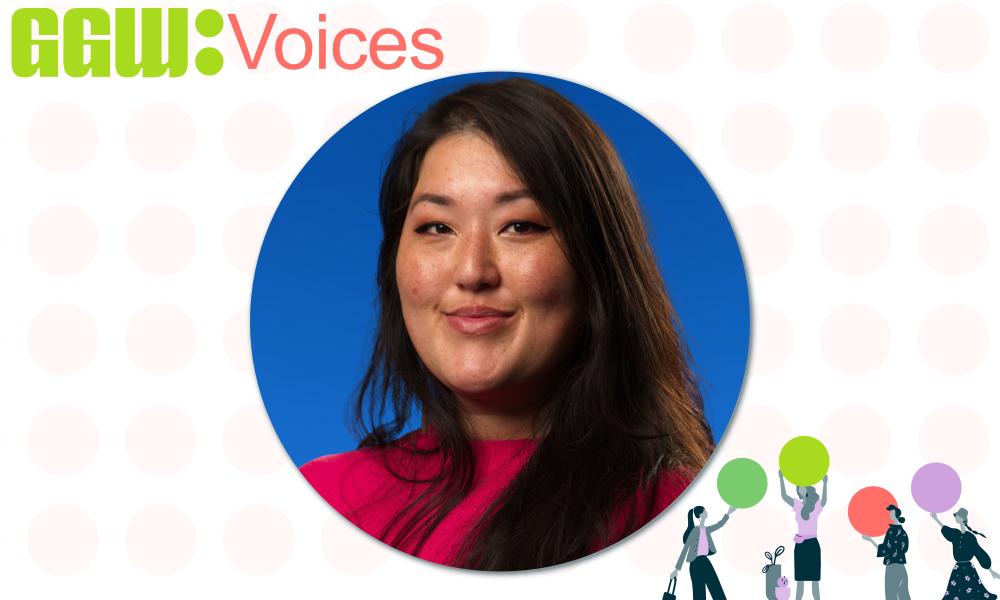

GGW Voices is an ongoing collaboration between CDC Gaming and Global Gaming Women featuring commentary and insight from women in the gaming industry.
“What are some qualities of good leadership?”
The question hangs in the air, and the room takes on a tense stillness. Words immediately run through my head, communication, empathy, listening skills, courage, advocacy. I look around the room of this leadership workshop, full of incredible women with incredible careers, and we all hesitate.
It’s the kind of silence that many women know so well.

Someone asks a question. You know the answer, the words form in your mind, and instead of speaking, you wait. You don’t want to talk over people. Let someone else have a turn. What if you’re wrong? What if you come across as overbearing? What if you look like an idiot and everyone laughs and throws eggs at you?
And before you know it, the moment passes, someone else speaks, and you’re left with the familiar discomfort of having made yourself smaller.
“Communication skills,” says one woman. The brave one who breaks the silence.
“Being able to listen,” says another. The discussion starts to pick up. It was never about being right; it was about sharing our experiences with one another.
Despite 10 years making games, starting as an artist, learning about the market, the industry, our players, developing an eye for what works, and why, I still felt unsure that I had anything to offer. Knowledge and confidence don’t always show up together, and even with everything I’d built and learned, I still found myself holding back, self-disqualifying before I’d said a single word.
I was waiting for the right moment, or for someone to ask me directly, for some sort of sign that I had earned the right to take up space in the conversation.
This is a pattern that is certainly not unique to me. I’ve seen it my whole life – women with sharp instincts, real experience and deep insights, who still hold back. It’s not a lack of capability or ideas, not a lack of ambition. It’s this deeply ingrained habit of waiting for permission to contribute. We are taught to give space, to not interrupt, to be certain before speaking. And while making space for others matters, it should not come at the cost of your own voice.
Something shifted for me in that room, watching the other leaders speak. They seemed to understand that sharing their perspective and knowledge was a gift, an act of generosity. Their voices and lessons and years of experience helping the women in that room to navigate their own uncertainty.
I made a decision that day, writing two words down in my notebook. Speak up.

It felt uncomfortable at first; adrenaline would make my voice waver and my heart pound. But I didn’t die, and nobody called me an idiot, and nobody threw anything. What happened was a conversation that was richer for our active participation.
It made me understand that the version of me who was waiting for permission to speak was not being gracious or humble. And maybe by making myself become smaller, I was reinforcing to others in the room that they should do the same.
Using your voice – advocating for your work, your team, your ideas – becomes easier the more you do it. You become able to contribute to the outcomes that really matter to you.
But it doesn’t stop there! Once you start showing up fully, you notice when others are not. The junior designer who defers to others. The talented artist who is too self-conscious to share their ideas. As leaders we have a responsibility to create the room we wish we had walked into.
It is so important that we create opportunities for people to speak. Ask for their opinion directly, create the moment they are waiting for, and be someone who makes it easier for others to find their voice and share their perspectives. The culture where women feel safe to speak up is something we must build together, one conversation at a time.
You do not need to wait until you feel ready, you do not need to wait for permission.
Speak up.
