
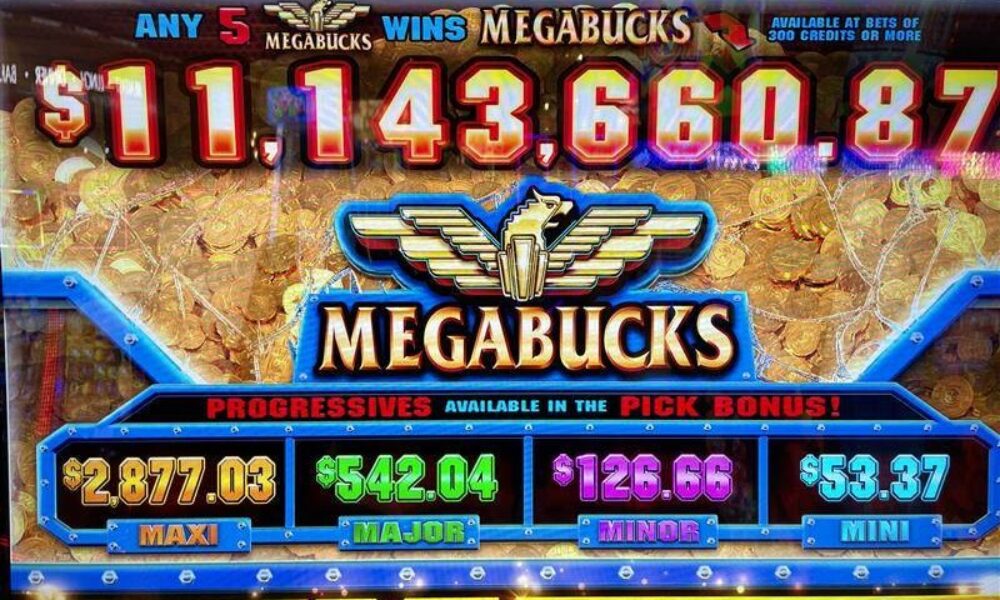

The folks at Eilers & Krejcik Gaming released a new report this month called “New Core Video Game Attributes.” It ranked game features (or the “game mechanics”) that were the most dominant in new slots during the last 12 months. All the big names were there, including “Perceived Persistence,” “Cash on Reel,” and “Hold + Spin.”
These are terrific features that have energized video slots in recent years. But ahead of all of them, and #1 on their list of the Top 25 game attributes since January of last year was a feature that is hardly new: “Progressives.” Therefore, it seems worthwhile that we look at how this wonderful idea started, and how it has evolved.
The dictionary definition of “progressive” is something that “happens or develops gradually or in stages.” That’s also a pretty good description of the history of progressives. They have seemingly been around forever, but their technology leaped forward in a series of breakthroughs.
Perhaps the major contributor to their modern success was slot manager Norman Little (1922-2010). He made two significant advancements. First, he installed some of Las Vegas’ first electro-mechanical $1 slots. Then, he arranged them in a carousel with a live attendant in the middle. That was not unique, but what he did next was.
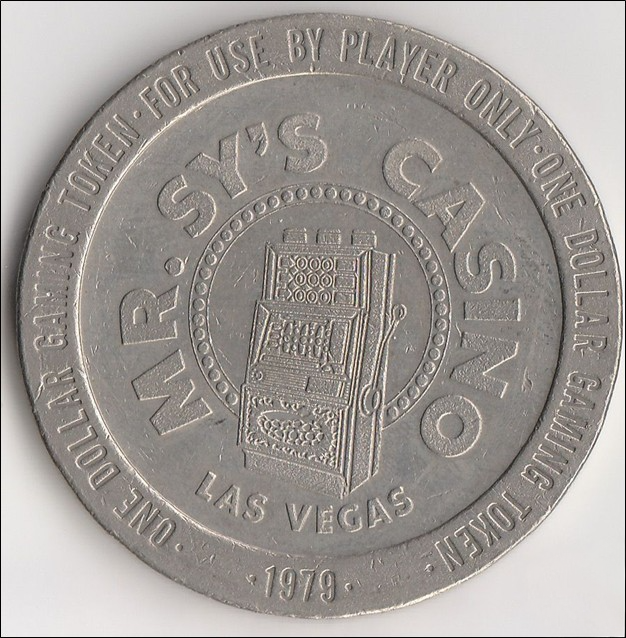
Working at the small Mr. Sy’s casino located just across the street from the Stardust (now Resorts World Las Vegas), he mounted large pads of tickets above each machine in his carousel. He then had his attendants tear off one ticket every five minutes that the game was played.
Each ticket pad was like an oversized 365-day desk calendar, but instead of dates, each page showed a dollar amount that increased by $1. Although human controlled, this was one of the first “linked progressives.” And it proved very popular.
The second (and perhaps most important) contribution Little made was in 1972 when he asked the casino’s young sound technician if he could make this idea work better. Little realized there might be regulatory problems with his current strategy since there was no accounting, it was completely manual. An attendant might forget to tear off a sheet, or other times tear off too many at one time. That technician Little asked was future “Gaming Hall of Fame” inductee John Acres.
And the pivotal moment came when Little told Acres that he could not pay him to make the improvements. Instead, he urged Acres to start his own company.

John Acres (Photo: Las Vegas Review-Journal Photo)
That’s exactly what John did. “The first sale I got was at the Aladdin casino on their video poker machines,” Acres said, “And then I started selling them all over town. And that’s how progressives got started, a microprocessor controller that could count the coins as they came in. And to install my system, you had to go in and solder a wire to the coin switch and then solder another wire to the combinator (or reel wiper blade), because back then, the machines were still electromechanical. They weren’t electronic.”
That first company was called EDT. It did not (at first) stand for Electronic Data Technology, as most think. Rather, it was for Electronic Display Technology. While John Acres is accurately credited with developing the first slot and player tracking systems, ticketing dispensers, real-time tracking and player bonusing, his first (and continuing) passion is for progressives and their display technology.
“Norman told me, ‘If you can ever predict beforehand who’s going to stay and who’s going to bolt to the door, you’ll be very successful.’ That challenge became my life’s work,” Acres says, “and I’ve spent the 52 years since striving to understand why people gamble and how to motivate them to spend more.”
For him and his teams, that often meant exploring new and different forms of bonuses and progressives.
As mentioned, you’d be hard pressed to find a single top performing slot machine today that doesn’t feature one or more progressive meters. Whether they are called “Megabucks” or “Grands,” “Minors” or “Must-Hit-Bys,” these accumulating jackpots are still one of the latest and hottest trends.
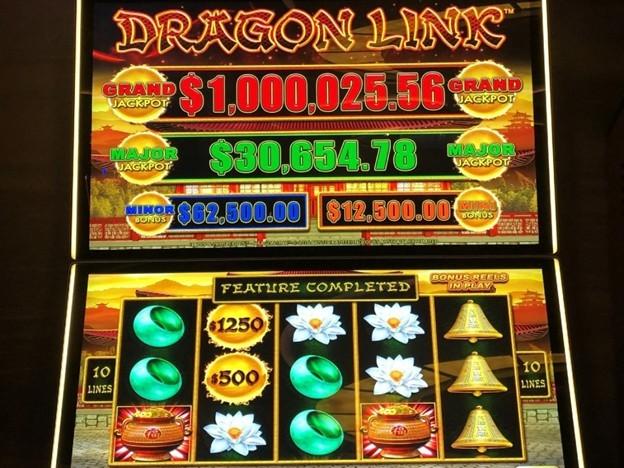
Aristocrat’s Dragon Link, with four progressive-like meters, is the top performing game in the industry today
(If you want to understand some of the math and terms behind progressives, check out our “Slots 101” story from two years ago.)
Using $40,000 in a “seed money” down payment from casino owner Steve Wynn, Acres built him a series of progressives. One of them was a first: a meter that started at $1 million for the Golden Nugget in Atlantic City. When that jackpot hit for $1.1M, the publicity went viral. Wynn was delighted, and Acres’ company was off and running.
After selling EDT, Acres joined with partner Mike Stone to create Mikohn1, known for signage, digital meters and progressive systems. Their dot-matrix tri-colored meters (shown below) and their digital controllers were the industry standard for many years, before being replaced by LED video meters and integrated controllers. But you can still see many of those original meters on floors today.
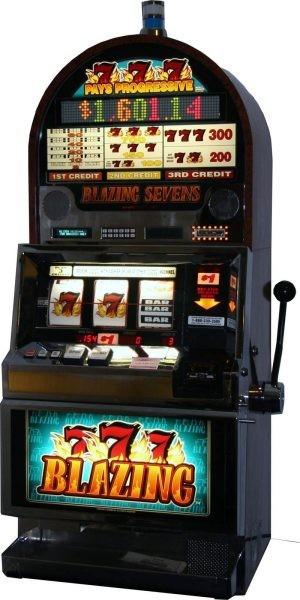
In a parallel development in Australia, Aristocrat’s Dan Tracy hatched a concept for a new form of progressive. Prior to this time, all jackpots were triggered by winning symbols on the machine or base game. But that meant that you couldn’t mix dissimilar machines on the same link since the odds of hitting their top jackpot, or any jackpot, might be different, and thus not allowed.
Tracy came up with the concept of a “Mystery Progressive.” Instead of the slot machine triggering the jackpots, this progressive controller had its own RNG (random number generator) that determined the winners. It collected the coin-in data from the machine, but the awarding of the progressive jackpots was independent of the individual or linked machines.
The first models were based on a random coin in number. For example, if the controller chose the 2,567th, or maybe the 539th coin, then you would be the winner if you played that specific coin/credit/token. Since the jackpot hit even when there was or was not a winning combination, players thought it was a wonderful “mystery.”
These new “RNG Mystery Progressives” needed a controller with more horsepower, so Acres and Mikohn built one ideally suited for them. With that combination, they became a big hit here and around the world.
For the first time, you could have Aristocrat Buffalos, Bally Blazing 7s, and IGT Twin Wins all on the same link. You could even mix denominations, and/or game types (spinning reels, video reels, and video poker/keno).
The flexibility of these powerful controllers also allowed operators working with Mikohn and their sign division to create innovative new concepts. One casino had progressive meters that resembled speedometers and odometers (to award random prizes on car carousels). Another resort used giant flashing 45rpm records with digital displays mounted on the top of each machine in a large bank to promote their “Rock n’ Roll” showroom production. Each record would randomly light up, play a song, until it settled on a winning machine and its progressive jackpot (it was an idea reminiscent of Norman Little’s first $1 carousel).
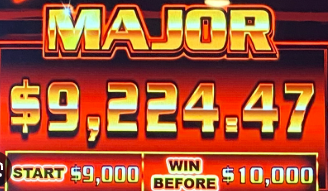 Since the progressive was computer-controlled, “Mysteries” opened the door to another one of today’s hottest trends, a “Must-Hit-By” jackpot. Winning was still completely random, but you could now set the start and (importantly) the ending jackpot. If the top prize was $10,000, you might set the meter to start growing at $9,000. It could hit anywhere in between, but it was guaranteed to hit at, or before, $10,000.
You can imagine that when a meter grew and approached the top award, play would dramatically increase. Like many things in gaming, this was both good and bad. All players loved the concept. However, Advantage Players2 especially loved it. Indeed, many of them gave up card counting and video poker to switch to these progressives which could have better odds.
They would only play those games when the meters were high. And they would never play the game when the meter was low. The worst of them even used disruptive or abusive tactics to force other patrons off their machines when the meters got close to the top award.
Despite the fact that “Must-Hit-By” games almost always perform above house averages, many casino operators are now hesitant to buy them since they are worried that the Advantage Players will always win, and their regular bread-and-butter customers will seldom get that chance. There are many variants, but these types of “must hits” are in a category called “true persistence” games.
In 2024 (the latest numbers released), the American Gaming Association said gross gaming revenues in the U.S. were $115 billion. It is undeniable that progressive jackpots are one of reasons that we’ve reached that incredible total. You can thank Norman Little and John Acres for a big slice of that haul.
If you have more time and interest, below you’ll find that the history of progressives goes back a bit further than the 1970s…more than 130 years back.
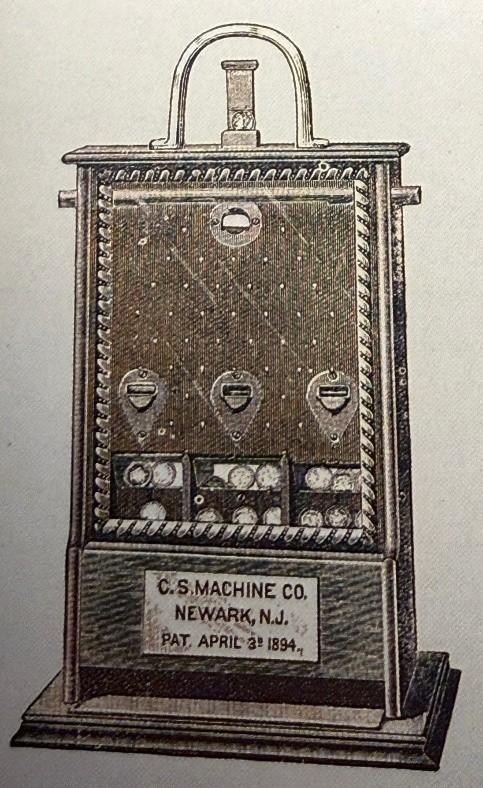
Clawson Slot Co. “Three Jack Pot”
It started around 1894. That year, the Clawson Slot Machine Co. patented their “Three Jack Pot” 5¢ game that featured triple pots that grew and could be won if your nickel dropped into the right slot. There were no “meters,” but the jackpots did “progress” and get larger as they were played.
But the golden age of non-metered progressive machines was from the 1930s to the mid-1960s. Classic “Jackpot Front” games created by Mills, Jennings, Caille, National and others were common. These had an internal coin hopper behind a front glass display. Each time the machine was played, some of the coins wagered would drop into this hopper until it was full. When players hit the top award, the bottom hopper door would open and the coins would spill out, often on the casino floor attracting a great deal of positive attention.

Foreshadowing what was to come, casino managers noticed that the machines with full hoppers were played more than those with empty, or partially full, hoppers. Duh!!
And all machines with full hoppers were played more than those without any hopper at all. Alas, when a jackpot hit, play would drop dramatically since gamblers preferred the machines with full hoppers (double Duh!)
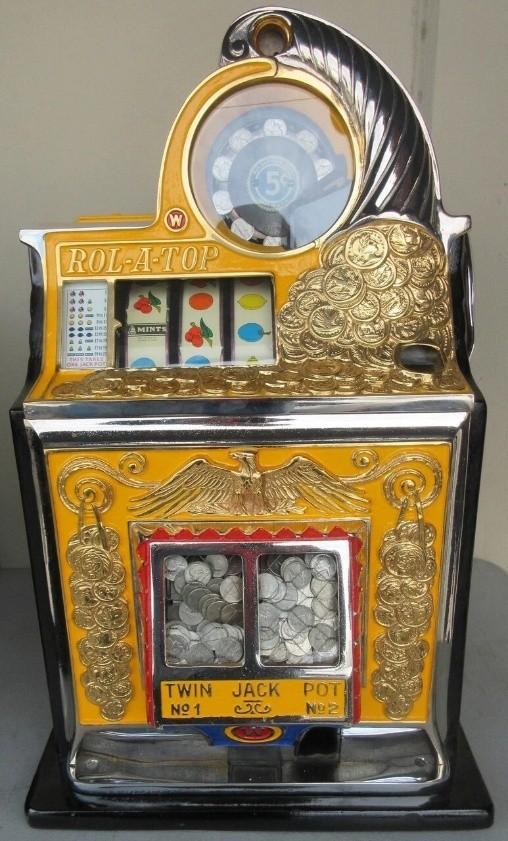
A Watling Roll-A-Top
The solution came from vendors like Watling, and others who introduced “Twin” hoppers (pictured). When one jackpot lined up, a single hopper opened but left the second one full. (This was the forerunner of today’s reserve reset progressive).
Many games today designate that some credits are directed to a “hidden” meter in the background. Thus, when the main jackpot is hit, there is immediately a new jackpot shown that is greater than the normal reset amount (because it was fed by the hidden meter).
The first real progressive “meter” on a game came from Bally. They used odometer-like numbered reels, borrowed from one of their pinball machines, to give us the first progressive meters mounted in the top of their “Hi-Boy” cabinet.
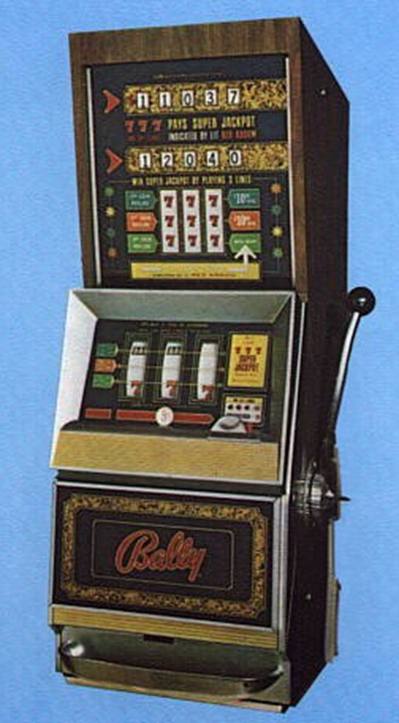
5-Line Bally Progressive Model 922-F
Bally remained a leader in the category with their E-Series games for several years. These games used LED segmented-line displays for the meters. However, they soon had to compete with the new, colorful meters and powerful controllers from Mikohn.
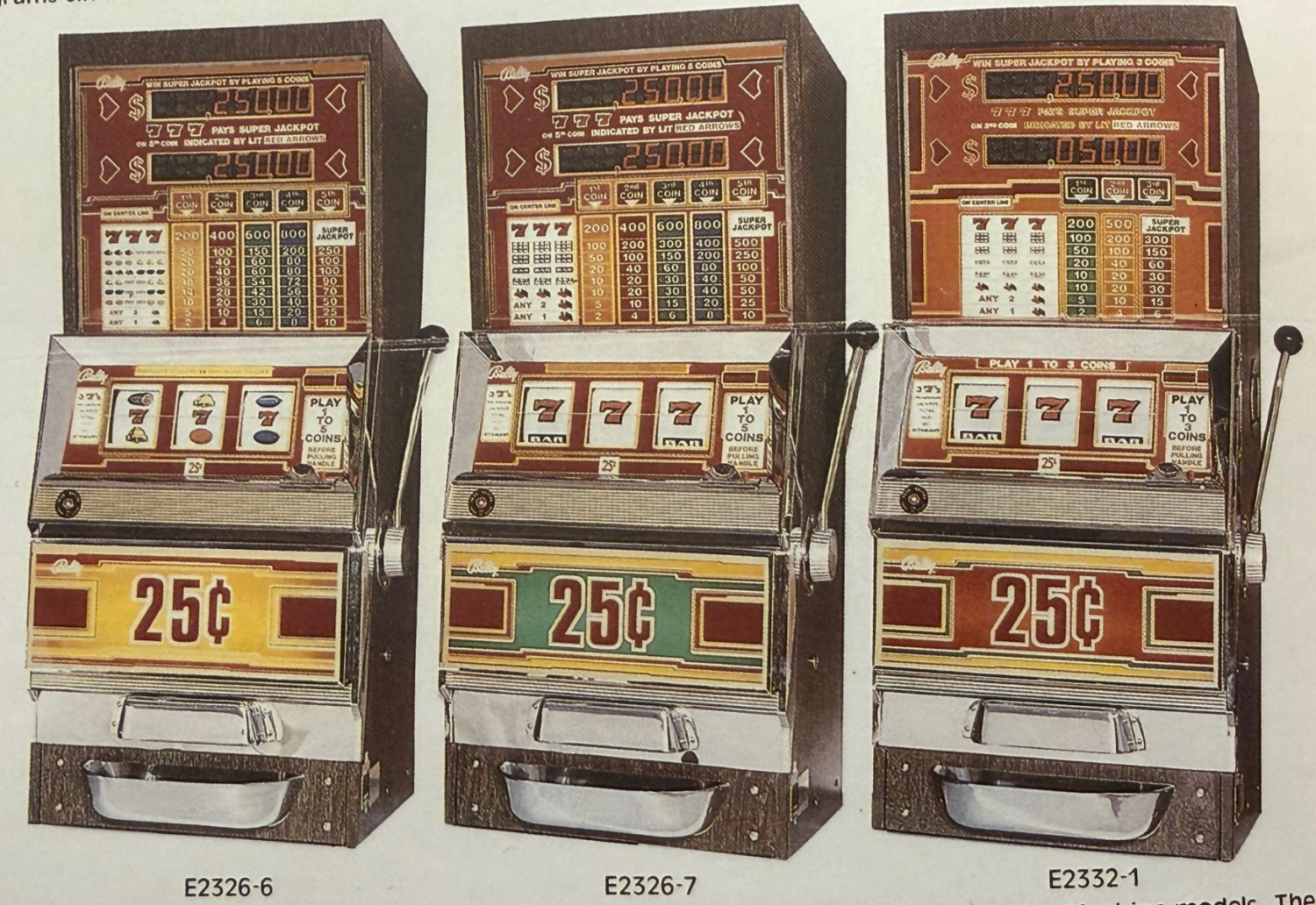
Bally E2300 Series
The Future
John Acres is certainly not done with casino innovation. With his new company, Acres Manufacturing, he and his sons are working on new concepts in cashless, progressives, Class II, real-time bonusing, and dozens of other technologies.
Interestingly, during our recent discussion, he talked about an older idea that never took off. It was called “Personal Progressives.” The concept was that players using a loyalty card could play a game with a progressive that they built, and only they could win. It would be displayed on the slot tracking system (rather than the game) whenever their card was inserted. They could see the amount growing and not have to worry that anyone else could hit it. It was also a real incentive for them to return to the casino knowing that eventually one day they would win that jackpot. It’s not certain why this never caught on, but perhaps it was just ahead of its time.
Now that “Must-Hit-By” games are starting to struggle because of Advantage Player abuse, perhaps a “Must-Hit-By Personal Progressive” would seem to be the best of both worlds.
Let us know when, John?
# # #
- Asian-sounding names were hot in the ‘80s, so John’s wife came up with the moniker “Mikohn” by combining Mike (Stone) and John (Acres).
- “Advantage Players” use their skill and knowledge to maximize their odds on table games, slot machines and bonusing programs. While their methods are not illegal, many casino operators consider them undesirable since they often win too much, and occasionally to the disadvantage of average players.

