
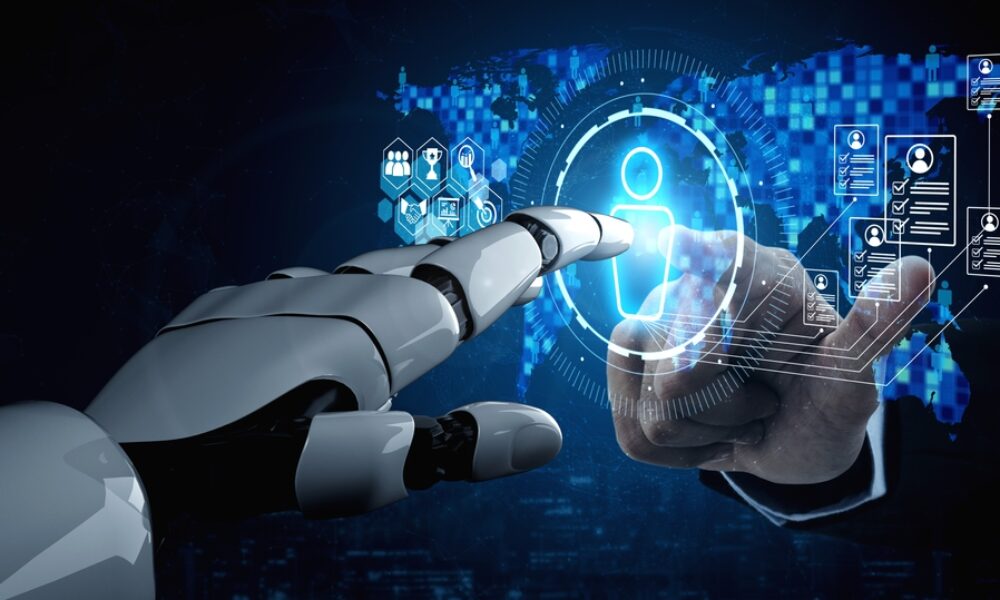

The overwhelming power of Artificial Intelligence (AI) is rivaled only by the speed with which it is becoming a part of our lives in ways we never thought possible.
No sooner did Generative AI flex its mighty muscles, along comes Agentic AI to take humankind to new levels of automation and deeper integration into operations and services. Or at least that is what open-source media would have us believe.
Andrew Cardno, a pioneering figure in AI during a career that has spanned more than a quarter of a century, has somewhat of a different take on the prevailing Agentic AI frenzy.
As co-founder and CTO of Quick Custom Intelligence (QCI), a world leader in Generative Artificial Intelligence, Cardno said that “We have been running agentic models here for years. It was not called agentic then. It was GPT (Generative Pre-trained Transformer)”.
In July of 2023, QCI announced the deployment of Jarvis, a Generative AI rules engine, as Chief Operating Officer.
“Generative Pre-trained Transformer is the new technology,” Cardno said. “It is the underlying technology that is changing everything, because it is really a huge step forward to trust generative models to run our businesses and to make decisions.”
The GPT model was introduced by OpenAI in 2018. It has since released new GPT versions as the number of trainable parameters and improved training techniques were developed.
“GPT models acting as people or agents in business enterprises is the technology that underpins all of us,” Cardno explained. “It is a massive transformation.”
QCI is at the forefront of this new frontier. Earlier this year, the re-acquisition of VizExplorer, a company Cardno founded, enhanced QCI’s position as the global leader in AI-driven analytics and operational intelligence for casinos and resorts.
The reunion was celebrated at G2E with the launch of AGI56, a transformation of the QCI technology stack. AGI56 optimizes player development, slot performance, marketing, and operations with advanced generative AI tools, including Chatalytics Generative Engine.
“Before the term agentic, I was explaining that there are two variations of the GPT model, or AI in general,” Cardno revealed. “Namely, the co-pilot model or simulacra (an image, representation, or imitation of a person or thing), which is another word for agentic. Simulacra behave like a person but have distinctive characteristics.
“They are not humans and are noticeably different. A co-pilot is something that helps humans. Many tech companies are doing co-pilots. All software companies produce them, including QCI. They are not human. They are noticeably different. Yet they function in many ways like a human can function and perform tasks in an organization just as a human can.”
Cardno shared that the major change with generative technology is not the co-pilot, even though he acknowledges that it is important. The major change is that they can take on roles that in the past could only be done by humans.
“What we are doing now is calling it agentic,” he explained. “It is naming what is the core of the generative pre-trained transformer model, which is the ability to behave like a human individually or in groups.
“The term agentic represents the ‘buzz’, the excitement, about just how dramatic this change is happening all around us when we have computers taking on the roles that in the past only humans could do. There are almost no constraints on what GPT can do.
“The most demanding thing for me to figure out is what it will not do, rather not what it will and can do. The only thing I propose it will not do is have fun for us. We are still going to go for a jog around the park or take a bike ride.
“You cannot say to your agentic agent ‘go and have a bike ride for me’. It cannot take away human interaction or fun things. When it comes to what we do to run the world today, agentic agents can take it on.”
Cardno went so far as to illustrate that an agentic model can behave very much like people to the extent that you could not detect that you are talking to or engaging in some manner with an agent. He said that the capabilities are extraordinary in that the agentic agents behave very much like people and have thought processes that are human-like.
“I think that agentic models are in many ways like Spock from Star Trek,” Cardno shared. “They can exhibit emotion, but only when you tell them to. They think like Spock. They have this incredible breadth of knowledge. They will give their view. You can tell them to be emotional, but they are not emotional by nature.
“In a way, the agentic models that we have invented are like aliens, like Spock. They are different, they are not human, yet they are capable, like Spock, of the same kinds of things that humans can do.”
The exploration of GPT and agentic AI has revealed its ability to perform as thinking human beings, which begs the question: Will this science eventually bring us to things that human beings cannot do? Cardno’s response was quick.
“I think we have already passed that,” he said. “Just in terms of raw processing power and capacity, they are already well beyond what humans can do. Think about Spock. Does Spock do things that humans cannot do? I would argue, yes! Human beings cannot reason, think, understand, or comprehend the volume of data that Spock does.
“He has the computational capacity, the memory, and the knowledge of broad areas of understanding of science and technology that no human would ever have. That is why I like the Spock analogy.”
Cardno then posed a question himself: “But can humans do the things that Spock cannot do? That is the question, right? The answer is, we are simply different.”

“We have invented these things which are different. They are not humans. They are kind of alien. They think differently. They behave differently. They are already capable of doing almost everything a human can do and many things that humans cannot do.”
Finally, will AI ever be able to do things that human beings have never thought of doing?
“I think there is a real question around the capacity to innovate,” Cardno reasons. “I believe the short answer is ‘yes’. They have innovated already and continue to innovate. They are already doing things that human beings have never thought of.
“GPT will do different things,” he concluded. “But will humans also do things that AI has never thought of? Absolutely. This does not mean that all inventions will come from AI, but it does mean that it will be inventive.”

