


Privacy Crisis
Author: Chris Parker
2025, Screaming Bunny, 326 pages, $tbd
In a recent interview with Erin West, who was the keynote speaker at the World Game Protection Conference three weeks ago in Las Vegas, she told me about her desire to spread the word about online scams. As a former prosecutor in Silicon Valley, she is now an internationally-known evangelist preaching the gospel of avoiding scams. To that end, she created a weekly podcast which she explained was because, “This crime will not stop until my Aunt Judy knows about it.”
I loved her message, and she got me thinking about online safety. That led to buying a copy of “Privacy Concerns.”

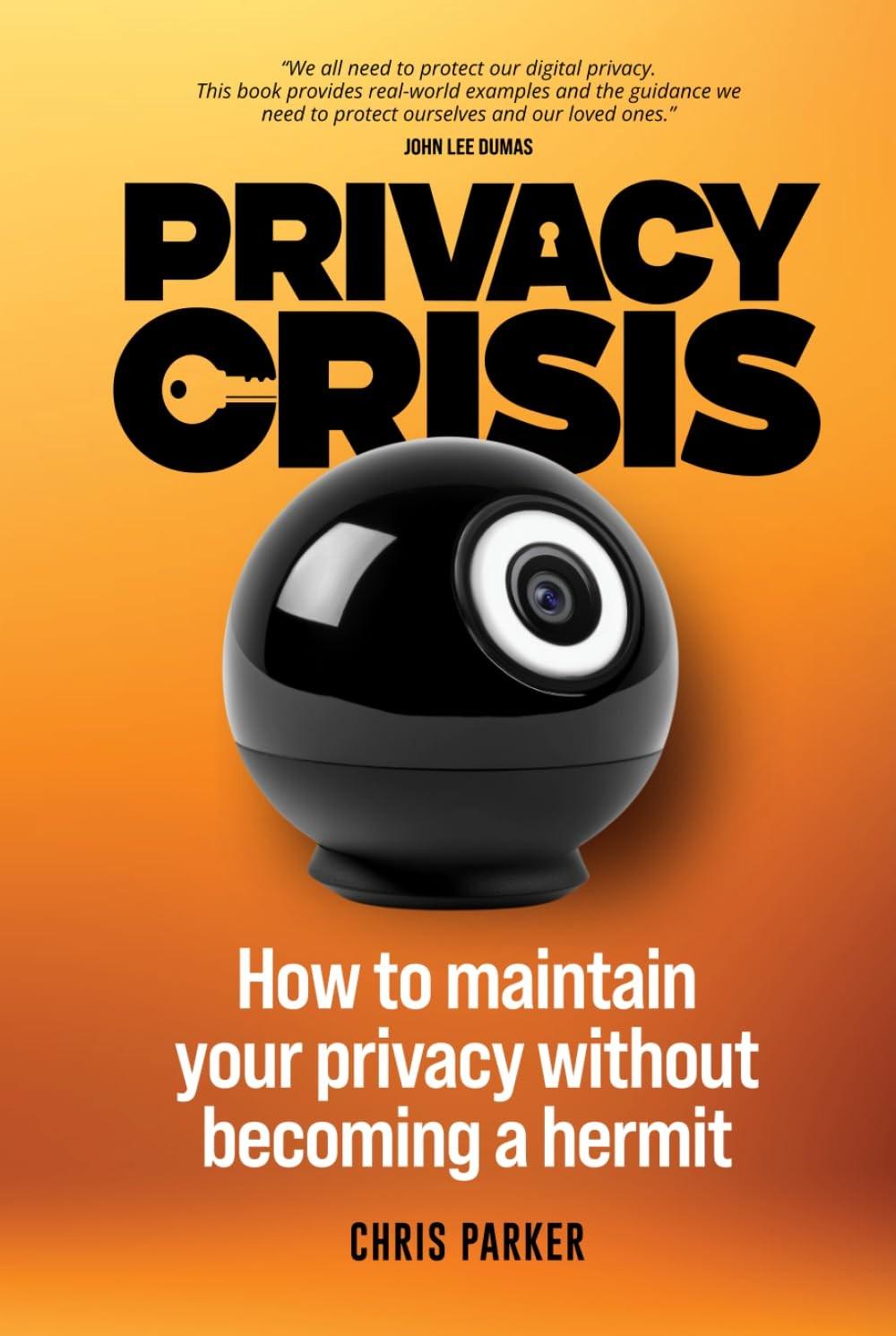 Chris Parker’s book has me rethinking some of my long-held thoughts on the subject. In the past, I felt almost immune to any headline-grabbing cyber ransomware or other online scams since I wasn’t fortunate to be a trust fund baby, nor do my assets (even with inflation) come even close to seven figures. Living paycheck to paycheck is not ideal, but it does come with the assurance that you will most likely be at the bottom of any cyber target list. Likewise, my long and happy marriage has inoculated me from romance scams and Nigerian princesses needing rescue.
However, in one of the longest “Introductions” sections I’ve encountered (30+pages), Parker says, “Personal information rarely seems valuable to anyone who doesn’t have a comprehensive education in information security…but even our most mundane details can be extremely valuable to corporations and thieves.”
Through his examples in the book, Parker made me realize that my data does have value even though I’m far from the 1% class. I have cherished photos, genealogy charts, financial records, credit cards, retirement account info and a career’s worth of documents and correspondence. Most of that is of no particular value to others, but they are incredibly valuable to me. Losing them would certainly be a personal privacy crisis.
Other than the opening lines of his lengthy introduction (which I would recommend you skip), the tips in Chapter One are golden. They alone are worth the price of this book (even if I’ll later explain how to get it for free).
That first part is called, “Immediate Actions to Increase Security” and if you don’t make it past the end on Page 63, you’ll still be much better prepared for today’s world. Simple tips I’d never heard of seemed smart: turn off your mobile phone on a regular basis. This is not a social media vacation but rather a 5-minute shutdown to reset caches, restore updates and clear out junk. It is just one of many valuable recommendations.
Chapter Two is also excellent, with even more tips (Have you thought about “spoofing” your MAC address?) Admittedly, this section and the remainer of the book can induce some paranoia. Chapter Three is a beast and sometimes seems over-the-top. Both of these sections will require some more consideration on my part before enacting and/or ignoring. I’m not sure I want to give out phony social security numbers or make my own fake non-governmental IDs. But the reasons Parker advocates these strategies does seem relevant. “If you want to maximize your privacy and security,” he says, “you should find a way to be comfortable with lying to corporations about some of your personal details.”
Some other advice is equally questionable: His advice about not posting any photos of your grandchildren on Facebook is complete sacrilege. It could get you excommunicated from the AARP. I am, however, aware that fake kidnapping plots or requests for bail money based on voice clones of your grandchildren are becoming too uncommon. Perhaps reluctantly I will cut back on my FB posts about them.
Chapter Five has some industry relevance with several pages devoted to “Compulsive Behaviors and Online Gambling.” While not everyone agrees, certainly brick-and-mortar casino operators will love this advice on the topic:
- Never install a gambling app on your mobile devices.
- If you get a marketing email from a gambling service, mark it as “spam” and consider setting up a rule in your email client or service to block all communications from that email address. Don’t even try to use the “unsubscribe” or “opt-out” links in these emails – they lead to landing pages that may offer personally-targeted incentives.
I’ll skip any other details of those last six chapters which dive deeper into various aspects of the previous three sections. Instead, his closing two paragraphs on the last page are a profound summary:
“It will never be impossible for a bad actor to achieve his or her goals, but it will continue to become more risky and costly – and that’s the best we can do. Therefore I believe the future will look a lot like the past: spam filtering will get better, but it will never be perfect; security methods will become harder to defeat at the cost of convenience, usability, and accessibility; scams and fraud will constantly adapt to work around those new methods; and governments will become increasingly involved with combatting the societal problems caused by personal data collection.”

Author Chris Parker
Who is Parker? He is definitely a good guy tech nerd. In 2000, he started the website “WhatIsMyIPAddress.com” that now has 13 million hits/month. Like Erin West, Parker also has an informative podcast called: Easy Prey https://www.easyprey.com/ aimed at data security.
What’s my final verdict on the book? It is a valuable read and offers some tricks to improve your security that are unique and helpful. Data privacy is far more important today than ever before, and I am somewhat certain that even the most tech savvy of you will find a tip or two here that will be helpful.
Unlike Parker, I’m not as concerned about marketing data excesses. Ironically, that is why Amazon recommended this book, since I’d been doing research about Erin West and cyber scams.
But on second thought, maybe if I follow Parker’s advice, I will be able to stop the constant stream of text ads and phone calls about buying more solar panels, investing in a Las Vegas timeshare and/or adding some new windows.
You can find the hardcover on Amazon for $16.95. I bought the book at that price, but I later learned on one of Chris Parker’s websites that you can download it, a companion workbook and/or an audio version for free.
# # #

