

There is a not-so-subtle irony to the fact that South Korea’s foreigner-only casinos are riding the crest of a wave right now.
Led by Paradise Co – the country’s largest foreigner-only operator – gaming revenues hit all-time highs in 2025, and early indications are that records will soon be broken again in 2026 if January numbers and CNY estimates are anything to go by.
In 2025, Paradise reported best-ever numbers for both group-wide revenue, which reached KRW1.15 trillion (US$789 million), and operating profit, up to KRW156.4 billion (US$107 million), proving that the doom and gloom of the COVID years has well and truly subsided.
Yet, right in the midst of this comeback, the storm clouds are gathering. Japan’s first integrated casino resort, MGM Osaka, is slated to open in 2030 – a future moment that threatens to suck the life out of the Korean casino revival.
At a cost of around US$10 billion, MGM Osaka promises to position itself as one of the world’s truly exceptional integrated resort experiences – alongside the likes of Marina Bay Sands and Wynn Al Marjan Island. But, unlike its high-end peers, the Osaka property will strike right at the heart of the Japanese customer that Korea’s casinos rely on so heavily.
Recognizing the threat, an alliance of Korean foreigner-only operators and other industry stakeholders last year held a two-day conference – in Osaka of all places – to discuss the threat MGM Osaka poses and moves they should make to mitigate the danger. Suggestions ranged from a comprehensive overhaul of the country’s regulatory framework to the full utilization of integrated resort-style properties in order to boost international tourism.

The cursory evidence suggests that providing a truly world-class integrated resort experience to rival that of their regional peers is undeniably the direction to head in.
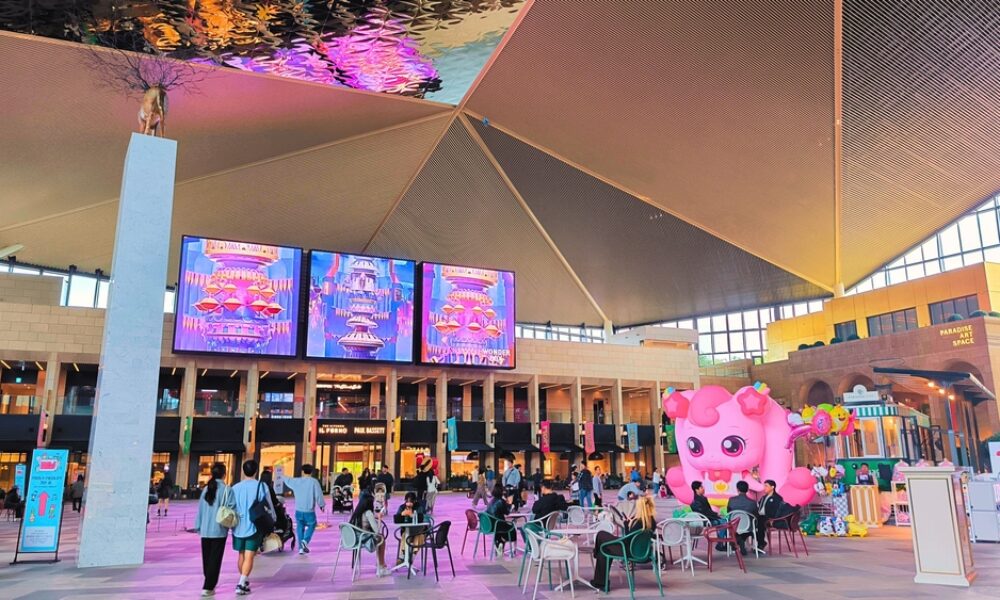
In fact, even those impressive 2025 results for Paradise indicate a stark difference between the performance of the company’s Paradise City integrated resort in Incheon and its “casino-only” offerings in Seoul and Busan: while Paradise City booked record 4Q25 revenues, Paradise Walkerhill in Seoul and Busan Casino actually saw their combined casino sales fall year-on-year.
That trend can also be seen elsewhere. Lotte Tour’s impressive integrated resort Jeju Dream Tower reported month-after-month of new record revenues and footfall in 2025, while Grand Korea Leisure (GKL) – which runs three casinos in Seoul and Busan but none with an IR-style offering – saw only subdued growth.
Clearly, international customers and local foreign passport holders are increasingly gravitating to the premium offering these larger resorts can offer.
Seeing the writing on the wall, Paradise has already made additional moves to enhance its offering, including purchasing the 501-room Grand Hyatt Incheon West Tower to expand its footprint at Paradise City, revamping the VIP space at Paradise Walkerhill and opening a VIP Lounge at Seoul’s Gimpo International Airport. It is also planning to develop a luxury hotel in Seoul.
GKL recently pondered acquiring its own casino site in Seoul rather than simply renting space, noting that the lease model imposes restrictions on its ability to adjust floor space or renovate to enhance the property’s appeal at a time when competition for international customers has never been higher.
The company ultimately backed out of such a move, but it wouldn’t be surprising to see this concept revisited in the near future. Given the ever-looming presence of MGM Osaka, GKL’s very survival may depend on it.

