

My friend David and I got together recently. He wanted to talk about the challenges he saw for the gaming industry. Labor shortages and a salary gap between gaming and other industries are becoming major issues. In his mind, casinos are at a critical stage; there are not enough employees to properly operate a casino in many jurisdictions. Worse, casino pay standards are too far below other industries to attract good talent. David cited the case of a talented young person he knew. The person was exceptionally good at mathematics and would have made a very good addition to David’s staff. However, within a year of graduating college, the young person was making $250,000 a year, with more on the way. That same person might have reached $50,000 working for my friend. But even that was only after a few years of learning the ropes.
Clearly, that is not going to work. My friend will never be able to compete for the professional talent he needs. Managerial and professional positions are not the only ones where he and the rest of the industry are being left behind. There are many gaming jobs in the same situation— food service, dealers, and slot techs, for example. A small or medium-sized casino simply cannot afford to pay as much as other industries. My friend wondered if the inability to fill key positions and meet the increase in wages for any position might cause many casinos to close in time.
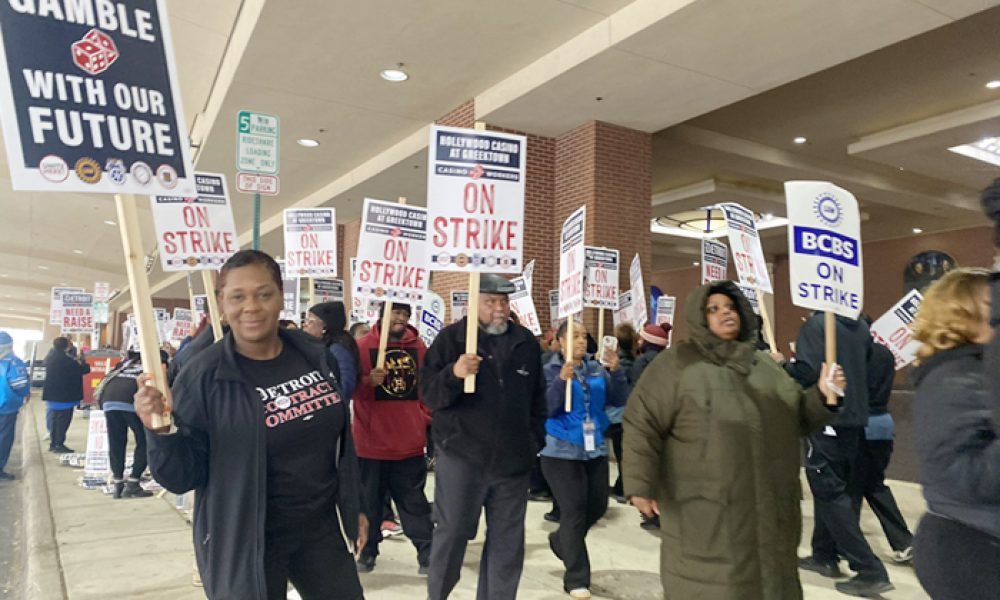
This question is especially significant today. Casino workers in Detroit have followed their United Auto Worker brothers and sisters into the picket line. In Las Vegas, the Culinary Union is threatening to shut down the Las Vegas Strip during some of the biggest events in the city’s history. It is thought that casinos can afford to pay not only higher wages, but much higher wages. It is widely believed that casinos are gold mines, minting money and making executives and investors wealthy.
Those who think that might want to look at the revenue for Detroit casinos. It has been on a long slow decline for years. Detroit has a limited market, at which new products and casinos are steadily eating away. Every time another casino opens in neighboring states or another gaming option becomes available, Detroit casinos take a hit. They are not on the verge of failing, but they are on a trajectory for at least one to fail and close over the long term.
That is not true in Las Vegas. The city is on fire. New events, new properties, and now a very successful professional sports industry are driving revenues up and up. Las Vegas is bullet proof. Until it isn’t. Another pandemic, a national recessio,n or some other black-swan event could change everything. Las Vegas needs an open free-flowing economy and people traveling in droves to do well and meet the pay demands of the city’s workers.
Gaming is not the only mature industry facing a similar crisis. The auto industry is another. Ford Motor Company is in the midst of a labor strike; workers are demanding higher wages, better benefits, and more job security. They maintain Ford and the other car companies are making billions, while workers struggle to keep up with inflation. The executive chair of Ford Motor Company, Bill Ford, warned workers that it was on the verge of failure. “We are at a crossroads,” Ford said. “Choosing the right path is not just about Ford’s future and our ability to compete. This is about the future of the American automobile industry.”
Oh, come on, Billy, are you not being a little overly dramatic? Possibly he is, but maybe not. The American auto industry dominated the worldwide industry until the oil crisis of the early 1970s. Gas prices shot up and supplies of oil declined. Enter smaller foreign cars. Japan and Germany were already making smaller and more fuel-efficient cars by necessity. Almost overnight, the American car industry changed and foreign manufacturers gained significant market share. Ford and its fellow manufacturers lost ground that they never recovered and not all survived.
The auto industry is standing at the edge of another paradigm shift. America and the rest of the world are moving to battery-powered cars. At the same time, worldwide, the manufacturing of automobiles is increasingly automated and that is replacing human workers. The auto companies in this country are too big, too labor intensive, and too slow to adapt to successfully compete against the likes of Tesla. The workers are not at fault, but labor costs have added to the lack of competitiveness of American cars.
The casino industry is facing a like challenge; new products are eating away at the market share of traditional casinos. Sports betting, igaming, freestanding video gaming, and mega lottery jackpots are cutting into the disposable income of casino customers. In addition, casino gaming and Indian casinos have spread to nearly every corner of the country, further slicing up the pie. For example, Indiana, Illinois, New Jersey, and Connecticut have seen their once-secure revenue streams eroded by casinos and slot machines in the surrounding states.
As my friend pointed out, the labor shortage and competition for executive and professional talent add to the revenue squeeze on casinos. As with any industry, those most at risk are the older, smaller, and less profitable properties. The revenues and profits of those and other at-risk casinos will continue to decline due to the competition. At the same time, the inability to attract talent and pay the wages of other industries will lead to further declines in revenue and profit; it becomes a vicious cycle. In that scenario, many casinos are between a rock and a hard place.
But this is just speculation, isn’t it? These are only the thoughts and idle questions discussed by two friends over dinner and beer. This was not researched, fact checked, or peer reviewed.

