
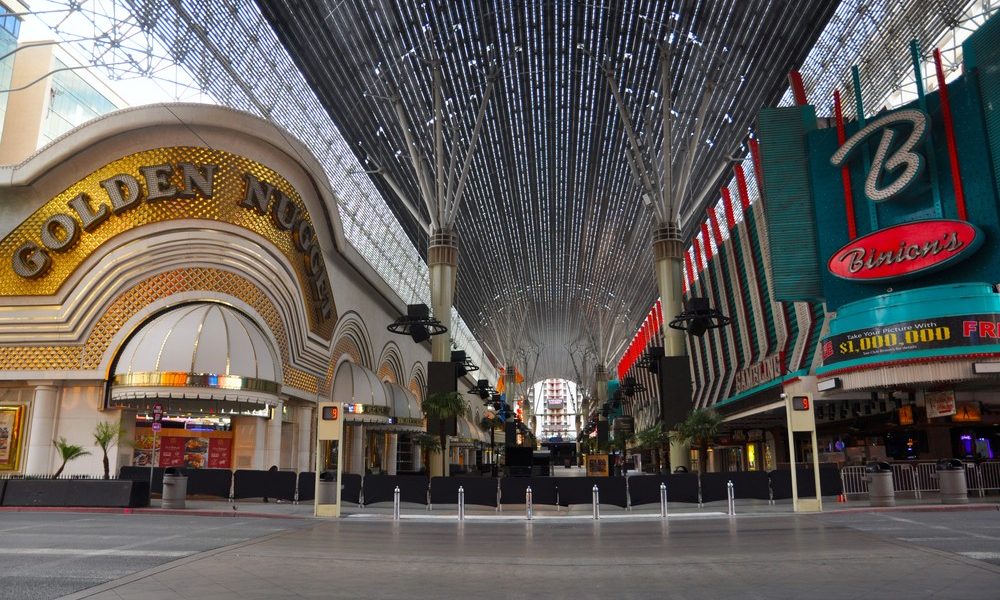

March 17 marked the sixth year since Steve Sisolak, governor of Nevada, ordered all non-essential business in Nevada to close; it was a pivotal moment in the history of gaming. At that point, the state’s casinos had been operating nonstop for 89 years. The casinos had never closed; there were no locks on the doors. Ryan Growney, general manager at the South Point, said, “We had been open for 15 years, with the doors never locked. So we had to go buy chains and padlocks and wrap them around the handles and shut this thing down.”
The closing of the casinos in Nevada by order of the governor was not only shocking, it was unthinkable. In Nevada, casinos are essential and have been the core of the state’s economy since the 1950s. No one knew what to think or how to plan. There was no roadmap to follow and Nevada was not alone.
Nationally, casinos closed in every state; a plague was sweeping the nation and shutting down everything. Very few “essential” businesses continued to operate in a pre-COVID manner. The shutdown impacted everything else; schools, banks, government offices, transportation centers, sports, movies, concerts, and other places where people gather all closed their doors. People wandered around confused. If they went shopping for food and supplies, they wore masks and stood away from one another. I met a friend in a park; we wore masks and kept a tree between us. It is hard to communicate naturally under those conditions.
The days of being shut-in were not good for communication. Trust was very difficult. Other people represented a medical threat; they could be carrying the virus. People wore masks and stood as far away as possible. The mistrust spread to institutions; people did not trust the media, government, businesses leaders, scientists, and doctors. A divide opened over the science of disease control; those who trusted doctors, vaccines, and government reports stood six feet away wearing a mask. The others did not trust the government, science, doctors, or vaccines. The national media also divided itself along those lines.
The pandemic created systemic crises in many areas. Transportation was interrupted and supply chains broken. The cost of transportation rose dramatically and along with it, the cost of anything that required shipping from one point to another. Regardless of the price, it was almost impossible to buy some things, like toilet paper.
The host of “Nevada Newsmakers,” Sam Shad, posted a joke online recently: “Grandpa, what did you during the Great Coronavirus Panic of 2020?” “Well, son, I had a very dangerous job. I was a tail gunner on a Charmin delivery truck.” Filled as it was with danger, uncertainty, and mistrust, the pandemic was a very trying time. But it passed.
In time, businesses reopened. As long as the mandate persisted, people wore masks and kept a safe distance. Even after the order officially ended, people still covered their faces and stood apart, but that habit faded as well. The economy started to come back. Businesses recovered at different rates. Movie theaters struggled for a long time; in fact, the industry has not recovered yet. The restaurant industry recovered, but many of the smaller stores did not. Casinos recovered faster than most businesses.
The casino industry came back with a bang. In the months following reopening, casinos everywhere experienced dramatic increases in revenue. It came as a surprise to most. At first, it was called “pent-up demand.” However, the same-store year-over-year growth continued for two or three years. Casino profits also benefited from the surge, but the profit did not keep up with the revenue.
Profit was easier to explain. During the crisis, casinos drastically reduced expenses by cutting staff, closing outlets ,and limiting other types of service. Eventually, casinos replaced the laid off employees, reopened restaurants and bars, rehired valet parker and hotel concierges, and other services were reintroduced. Competition ramped up and like other businesses, casinos spent heavily differentiating. By 2023, the cost structure was more than in the pre-pandemic era.

By 2024, the economy and the casino industry were operating normally. However, some things are not back to the 2019 normal. The pandemic facilitated some transitions that were already underway. Streaming services, online shopping, igaming, remote working, and home delivery are examples. None were invented during COVID, but while people were locked up at home, shopping, working, and being entertained online were not only natural, they were essential. The move online was not a total break. People still went out to shop, watch a sporting events, eat in restaurants and work in common workplaces. But not as much as before.
During the pandemic, if you did your grocery shopping online and had the groceries delivered to your house, it was not a trend. It was a necessity. Sitting in your living room watching a movie was the only alternative. Movie theaters have been under siege since television blossomed, but people locked in their houses for months at a time migrated to streaming services by the millions. Online gaming was one of those behaviors that got a plague boost.
Online gaming/igaming was legal in New Jersey and Pennsylvania before 2019, but it was a minor factor. During the crisis, igaming grew, but not enough to attract attention or impact casino revenue. However, in the years since, it has grown into a major force in gaming. Seven states have igaming and last year those states generated nearly $10 billion in gross gaming revenue; mobile sports wagering approached $16 billion. Remote gambling generated over 30 percent of gaming revenue in 2025. Since 2021, igaming growth has barely slowed, 15-20 percent instead of 20-30 percent at the peak of the growth curve.
The pandemic gets credit for solidifying the trend toward living, playing, shopping, working, being entertained, and gambling in cyberspace. That is the legacy of COVID for the casino industry and all other industries. A significant portion of every activity, even tail gunning, is done online now.

