


When Anita Ondine Smith discovered her husband, former NBA player Randy Livingston, had a gambling problem, she went on Amazon looking for a book that described her issue: the spouse of someone who had an addiction.
She found no books that fit that category.
“There were a few books on addiction, broadly, and there were even fewer on gambling addiction in particular,” she says, “and nothing that addressed the person standing next to the person with a problem. It was a real head scratcher for me.”
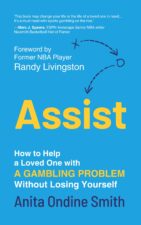
Assist
Smith took matters into her own hands, writing Assist: How to Help a Loved One with a Gambling Problem Without Losing Yourself (Live On Productions Press). The book recounts how Livingston’s gambling almost ended their marriage, and how she coped during his unwillingness to confront the problem.
Smith admits she made mistakes when initially trying to help her husband before she found the right formula.
“In the process of being in that moment, not only did I try different things, but I also did a deep dive into the research,” she says. “I just read as much as I possibly could, whatever I could get my hands on, to understand problem gambling in greater depth. The book really is the culmination of all of the research, in addition to our lived experience, sharing what worked for us.”
“Assist” is not self-help book. Smith describes it as “offering of a menu of options.”
“I’m not sitting here telling anybody this is what you should do,” she says. “Here are a few options. Try what’s going to work best for your particular person and situation.”
Livingston, who played in college at LSU, was drafted by the Houston Rockets in the second round of the 1996 NBA draft. He was on a team with Charles Barkley, Hakeem Olajuwon, and Clyde Drexler, and Smith theorizes that he got caught up in gambling while he was with the Rockets.
“What a moment in a young athlete’s life to have these icons saying, ‘Hey, you want to come to play with us?’” Smith says. “It’s hard to kind of conceptualize the allure of that sort of situation. It feels like you’re in, you’re accepted. That kind of culture definitely exists, and still exists.”
Smith’s range of emotions in dealing with Livingston’s issues ranged from anger to desperation. She tried harassing him, begging him, pleading with him to get help, intent on holding their marriage together.
What Smith learned is that she could only do so much.

“We need to develop better powers of observation and really trust our gut and say something if we see something,” Smith says, one of her sayings being “If you are constantly questioning your own instincts, they are probably gaslighting you.”
“It’s so important when you do have the conversation, not to approach it thinking, ‘I’m going to stop this person,’ ” she adds. “Because really, you can’t do that. You cannot control the other person, and that’s kind of learning lesson #1. If you can’t come to grips with that, then my book is not useful to you. You have to understand that as a functional adult, they are making choices for themselves and no amount of coercion is going to change that.”
Smith and Livingston, who live in Australia, are part of FanDuel’s “Trusted Voices: Conversations About Betting” campaign. “Trusted Voices” is designed to help trusted adults — including parents, guardians, and coaches — with tools and resources to talk to young people about gambling, potential risks, warning signs, and where to go for help.
Smith admits it may seem odd that she and Livingston are involved with a program supported by a gaming company. But FanDuel stood out as a company truly committed to responsible gaming, and Smith says CEO Amy Howe and Flutter CEO Peter Jackson have been exceptionally supportive.
“We were already starting to do this advocacy work, but we were just kind of two lone voices at that point,” Smith says. “And what we very quickly realized was by partnering, that could help to amplify the message we were trying to communicate. We don’t have the resources to reach that many people, so by partnering with FanDuel that has enabled us to speak in more venues, to reach more people.”

